


 Find A Showroom

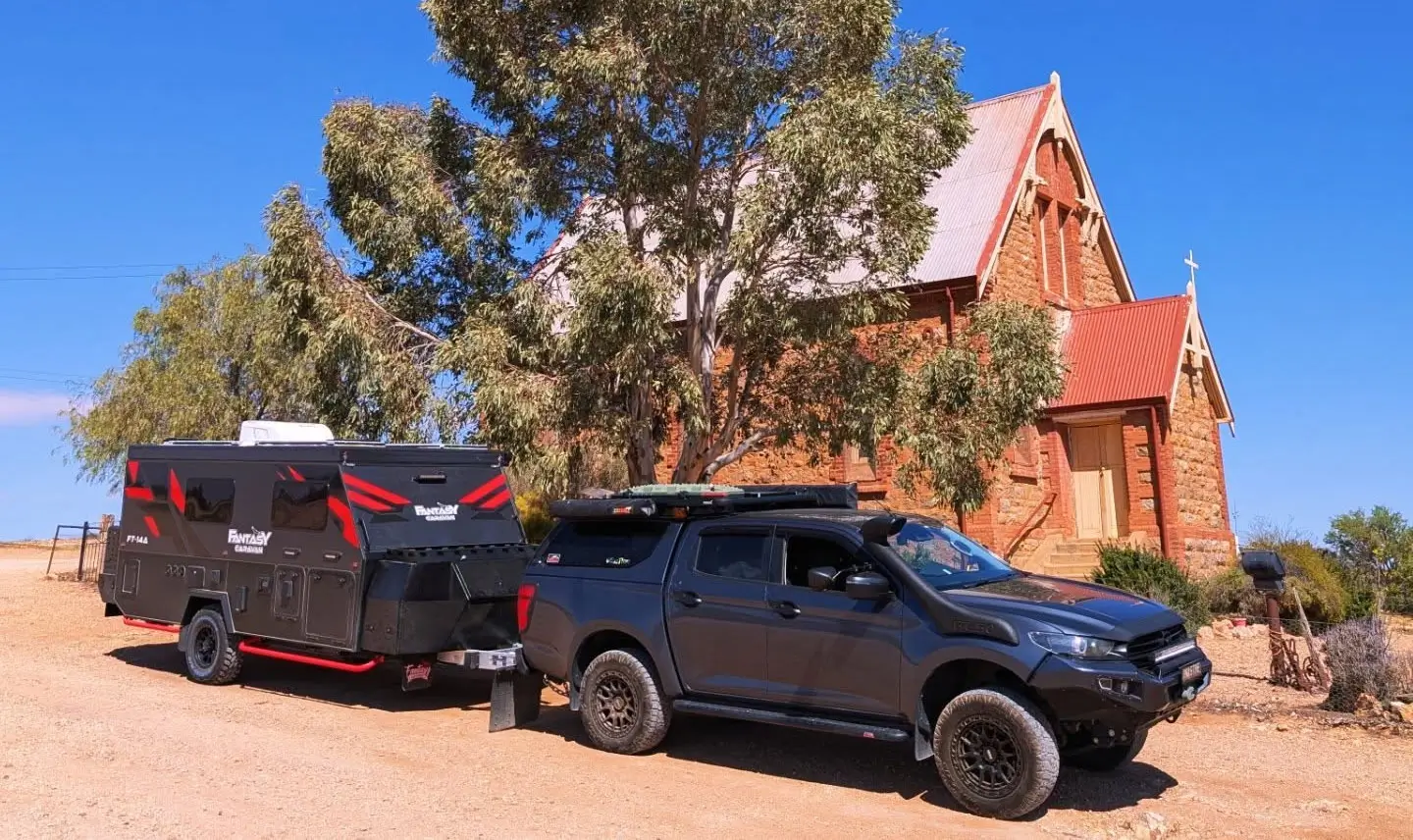
10 Things First-Time Caravan Owners Always Forget
Getting your first caravan is exciting, but there’s a lot to remember before you hit the road. After years of helping new caravan owners get set up, we’ve noticed the same things get missed over and over again. This caravan checklist covers the most common oversights that trip up first-timers, from towing weights to battery maintenance. Use this before your first caravan trip, and you’ll save yourself a whole lot of headaches down the track.
1. Checking Tare, ATM & Tow Vehicle Capability
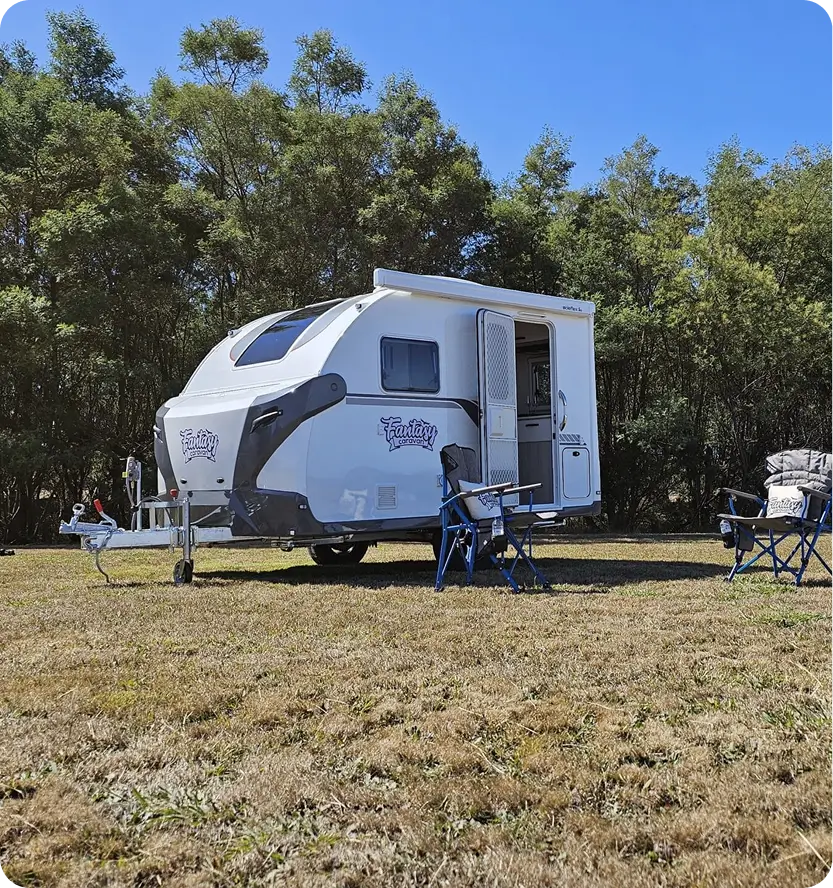
This is the big one that catches people out. Your caravan’s Aggregate Trailer Mass (ATM) needs to sit comfortably within your vehicle’s towing capacity, and you need to account for everything you’re loading in. The problem is that first-timers often compare their car’s towing capacity against the caravan’s tare weight (empty weight) and assume they’re fine, then load up water, gear, bikes, and supplies without doing the maths.
Your caravan’s ATM is the maximum it can weigh when fully loaded. That number needs to be less than your vehicle’s braked towing capacity, and you also need to check that your combined weight (car plus caravan) doesn’t exceed your Gross Combination Mass (GCM). You’ll also need to verify that your fully loaded caravan won’t push your vehicle over its gross vehicle mass limit.
For lighter caravans like the Mystic 10 small caravan with ensuite, this is usually straightforward with most SUVs. But if you’re looking at something like our Horizon Series of off-grid caravans, you’ll need a capable tow vehicle with serious capacity. Check your owner’s manual, write down the numbers, and make sure you’ve got headroom. If you’re not sure how all this works, we’ve got a detailed guide on understanding caravan towing weights that breaks it all down.
2. Proper Hitch Setup & Safety Chains
A wrongly secured coupling is dangerous. It can cause swaying, instability, or, in the worst case, complete detachment while you’re driving. The DO35 hitch (found in our Fury Series hard top hybrid caravans, among others) is a rock-solid system, but you need to know how to use it properly.
The coupling needs to fully engage with an audible click, and you should always do a physical tug test before you move off. Safety chains must be crossed under the drawbar and connected to the vehicle’s rated anchor points, not just clipped anywhere convenient. The chains should have enough slack to allow cornering, but not so much that they drag on the ground.
Your tow hitch also needs to be rated to match your caravan’s weight, and the tow ball weight needs to sit within your vehicle’s limits. Too much weight on the ball can overload your rear axle, while too little can cause dangerous swaying. Getting the proper weight distribution right is critical for safe towing.
If you’ve never used a DO35 hitch before, take ten minutes to read through our guide on how to connect a DO35 hitch. Getting this right the first time means you won’t be second-guessing yourself at every servo stop.
3. Battery Maintenance
Your caravan’s battery won’t look after itself. AGM batteries (like those in the Mystic Series) need regular topping up and trickle charging when the van is in storage. Leave an AGM battery sitting flat for a few months, and it’ll sulphate, which permanently reduces its capacity. Eventually, it dies altogether.
Lithium batteries are more forgiving, but they still need occasional charging to stay healthy. If your van is sitting unused for more than a month, either connect it to mains power with a trickle charger or disconnect the battery completely to prevent phantom drain from alarms and control systems.
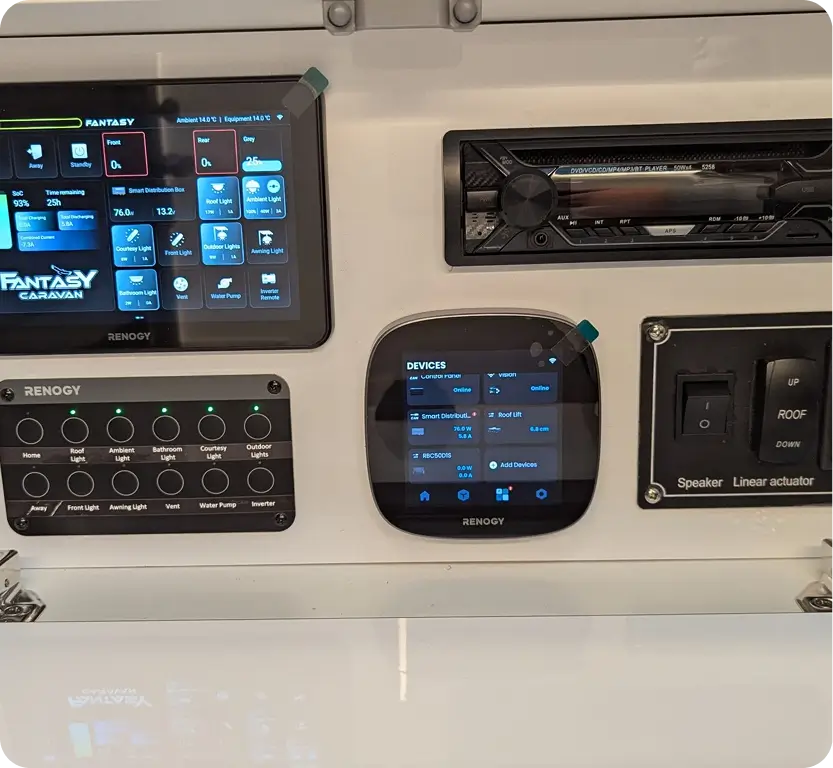
Before your first trip, check the battery’s charge level and make sure you know how to monitor it while you’re on the road. Most modern setups have a battery monitor panel inside the van that shows voltage and remaining capacity. Understanding your power and water supplies before you leave means you can plan your stops and know when you need to refill or recharge.
4. Monitoring Electrical Load
4. Monitoring Electrical Load
Just because your caravan has a big lithium battery, it doesn’t mean you can run everything at once without consequences. Power-hungry appliances like air conditioners, microwaves, kettles, and hairdryers draw serious amps, and they can drain even the toughest setups (like those in the Fury hard top hybrid caravans) faster than you’d expect.
The trick is knowing what uses the most power and being smart about when you run it. Your air conditioner is the biggest draw, so if you’re running it all day, expect your battery to drop quickly unless you’ve got good solar input or you’re plugged into mains power. If you’re off-grid, save the high-draw items for when your battery is full or run them sparingly.
Check your van’s inverter rating too. A 2000W inverter can’t run appliances that collectively draw more than 2000W, so if you’re trying to boil a kettle while the air con is running, you might trip the system. Most vans have a power management panel that shows current draw in real time, so keep an eye on it during your first few trips until you get a feel for what works.
5. Fresh & Grey Water Hose Care
First-time owners often forget to drain their hoses before packing up and hitting the road. Leftover water sitting in the hose can freeze overnight in cold climates, potentially cracking the fittings or the hose itself. Even if it doesn’t freeze, stagnant water in a hose tastes foul and can encourage bacterial growth.
After you’ve disconnected your fresh water hose, hold one end high and let it drain completely before coiling it up, and store it somewhere clean and dry, away from your grey water hose. Speaking of which, your grey water hose also needs to be drained and rinsed after use. Nobody wants to open a storage locker and find a mouldy, stinking hose that’s been sitting wet for weeks.
If you’ve got large tanks like those in the Skyline series of semi off-road caravans, make sure you know where the drain valves are and how to fully empty them before travel. Water is heavy (1 litre = 1kg), and driving around with full tanks when you don’t need to increases fuel consumption and puts unnecessary load on your suspension.
6. Slide-Out / Fold-Out Bed Checks
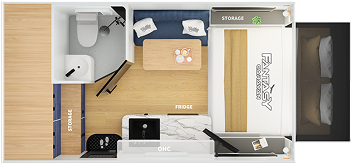
If your van has a slide-out bed (like the Frontier 13-A 13ft hybrid caravan) or fold-out sections, you need to make absolutely certain they’re locked in before you move. Forgetting to secure a slide-out is a costly mistake. The bed can extend while you’re driving, damaging the mechanism, ripping seals, or even hitting another vehicle if you’re in tight quarters.
- Slide-outs are fully retracted and locked
- Fold-out beds are properly secured
- All doors and hatches are closed
- Steps are stowed
- Awning is rolled up and secured
It sounds obvious, but it’s easy to forget when you’re distracted by packing up or trying to get on the road. Make the walk-around part of your routine every single time, and you won’t leave something undone.
7. Securing External Accessories
7. Securing External Accessories
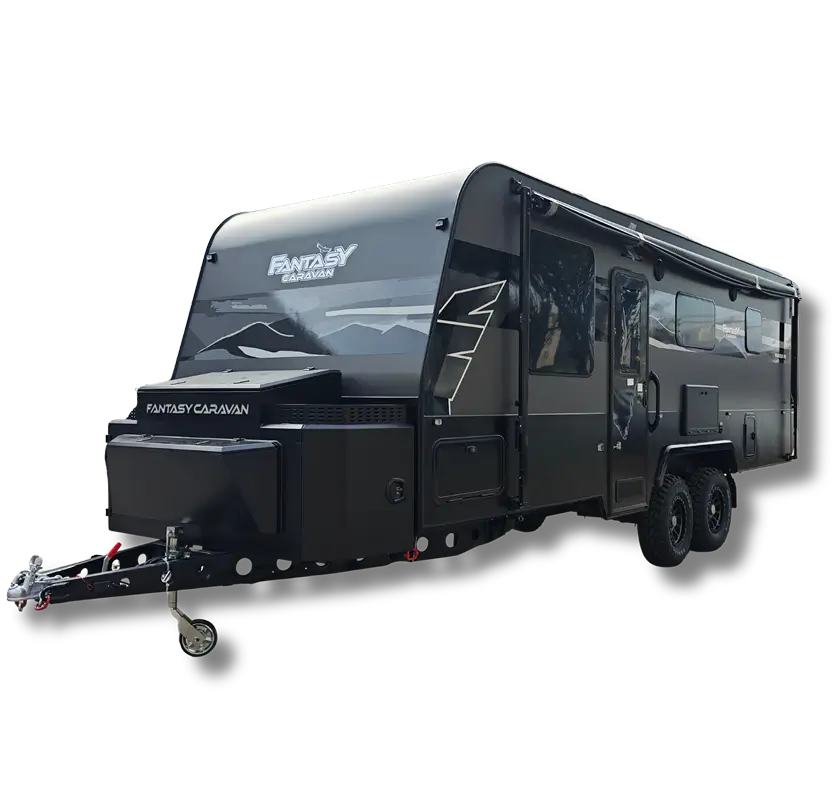
Unsecured accessories are one of the most common causes of mishaps out on the road. Antennas, awnings, bike racks, and external storage boxes all need to be properly secured before travel. An unsecured TV antenna will snap off at highway speeds, and an awning that’s not locked down can unfurl while you’re driving, causing damage to the fabric, the mechanism, or both.
Our Horizon Series of off-grid caravans for instance, comes with external storage compartments, roof racks, or side-mounted accessories such as awnings. Check that all doors are latched and locked, and make sure nothing inside the compartments can rattle around or fall out. If you’ve got bikes on a rear-mounted rack, double-check the straps and make sure the rack itself is properly secured to the van’s chassis.
External accessories are easy to overlook, especially if they’re up on the roof, but they’re the first things to get damaged if you forget them. Add them to your pre-departure checklist and tick them off every time.
8. Fire, Smoke & Carbon Monoxide Alarm Checks
Your caravan should have functioning smoke and carbon monoxide alarms, whether it’s a compact 12 foot caravan with shower and toilet or a larger hybrid. These systems are often overlooked because they sit quietly in the background until something goes wrong, but they can truly be the difference between life and death.
Before your first trip, test the alarms to make sure they’re working. If the battery is flat or the unit doesn’t respond, replace it. Carbon monoxide detectors have a limited lifespan (usually 5 to 7 years), so check the date of manufacture and replace it if it’s expired.
Gas appliances like stoves, hot water systems, and heaters all produce carbon monoxide if they’re not venting properly. A faulty flue or blocked vent can turn a relaxing night in your van into a life-threatening situation, so don’t skip this check.
9. Pre-Trip Mechanical & Tyre Checks
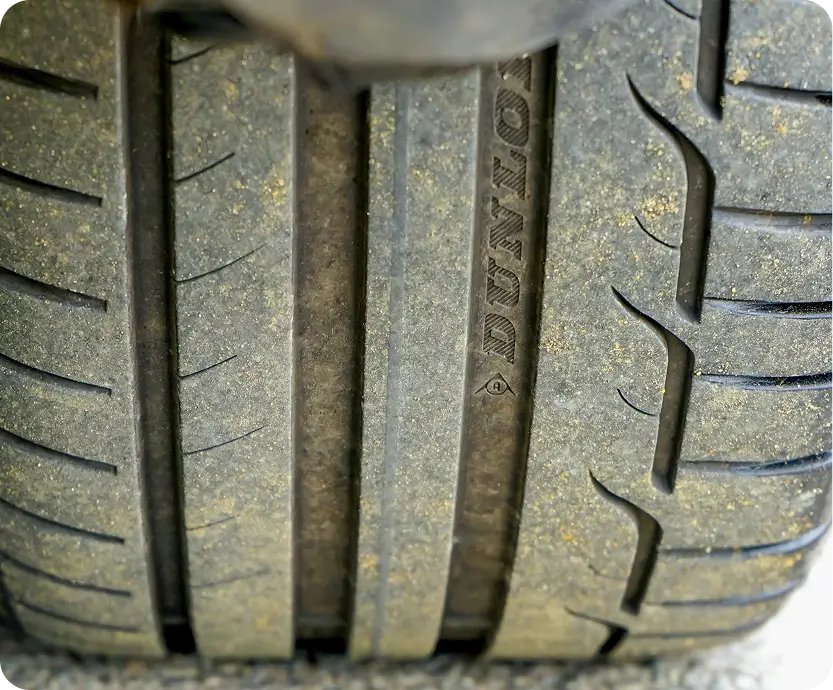
Before you tow anywhere, you need to check the basics: wheel nuts, caravan tyre pressure, and suspension. Loose wheel nuts can cause a wheel to come off while you’re driving, and under- or over-inflated tyres can overheat and blow out at highway speeds.
Check your tyre pressures when the tyres are cold (before you start driving) and inflate them to the pressure recommended on the compliance plate or in your owner’s manual. Don’t just guess. If you’ve got ALKO suspension like our Horizon Series vans have, give it a visual check for any obvious damage, leaks, or loose bolts.
While you’re down there, check your brake cables and electric brake connections. Make sure your jockey wheel is fully retracted and locked, and give the safety chains a quick visual inspection for wear or damage. These checks take five minutes and are essential if you want to safely tow your caravan without incident.
10. Warranty, Dealer Support & Paperwork
New owners often worry: “What if something breaks?” The good news is that we provide a 5-year structural warranty and 1-year manufacturer warranty across all our ranges, and your dealer is there to support you if something goes wrong.
Before you leave on your first trip, make sure you know what’s covered under warranty and how to get help if you need it. Keep your warranty paperwork somewhere accessible (take a photo and save it on your phone), and store your dealer’s contact details where you can find them easily.
If something does go wrong while you’re on the road, contact your caravan dealer first. They’ll be able to tell you whether it’s a warranty issue, walk you through a fix over the phone, or arrange for repairs when you get back. Most problems are minor and can be sorted out quickly, but you need to know who to call and what’s covered.
It’s also a good idea to keep records of any modifications or upgrades you make to the caravan. If you’re adding accessories, replacing components, or doing any electrical work, document it. This helps if you ever need to make a warranty claim or if you decide to sell the van down the track.
Don’t Overthink It, Just Get Going
This checklist might seem like a lot, but once you’ve done a few trips, it all becomes second nature. The mistakes first-time caravan owners make are almost always the same ones, and they’re all avoidable with a bit of preparation. Run through this caravanning checklist before your first few trips, and you’ll quickly get into a rhythm.
If you’re still getting set up or you’ve got questions about your van, talk to your local Fantasy Caravan dealer. They’ve helped hundreds of first-timers get on the road, and they’ll make sure you’ve got everything sorted before you leave. Find a dealer and get ready to start making some memories with Fantasy!