Find A Showroom

 01
01Liveable by design
Space and comfort that make the day flow.
15–22ft Semi Off-Road Caravans
A smarter way to tour Australia.
Enough caravan to actually live in. Enough capability for the last stretch of gravel. Without paying for the extremes you will never use.
Why we build it this way
At one end, the price looks good — until you start adding back everything that was left out. At the other, you pay for expedition gear you might use twice. Skyline sits in the middle on purpose — a semi off-road caravan, not an on-road-only van and not an expedition build. Sitting in the middle is not the same as compromising.
01Space and comfort that make the day flow.
 02
02Capability for the journey beyond the highway.
 03
03Power and control that keep life moving.
 04
04Small decisions that reduce daily friction.
Exterior
A calmer tow, a more capable last stretch, and a caravan that feels ready when you arrive.
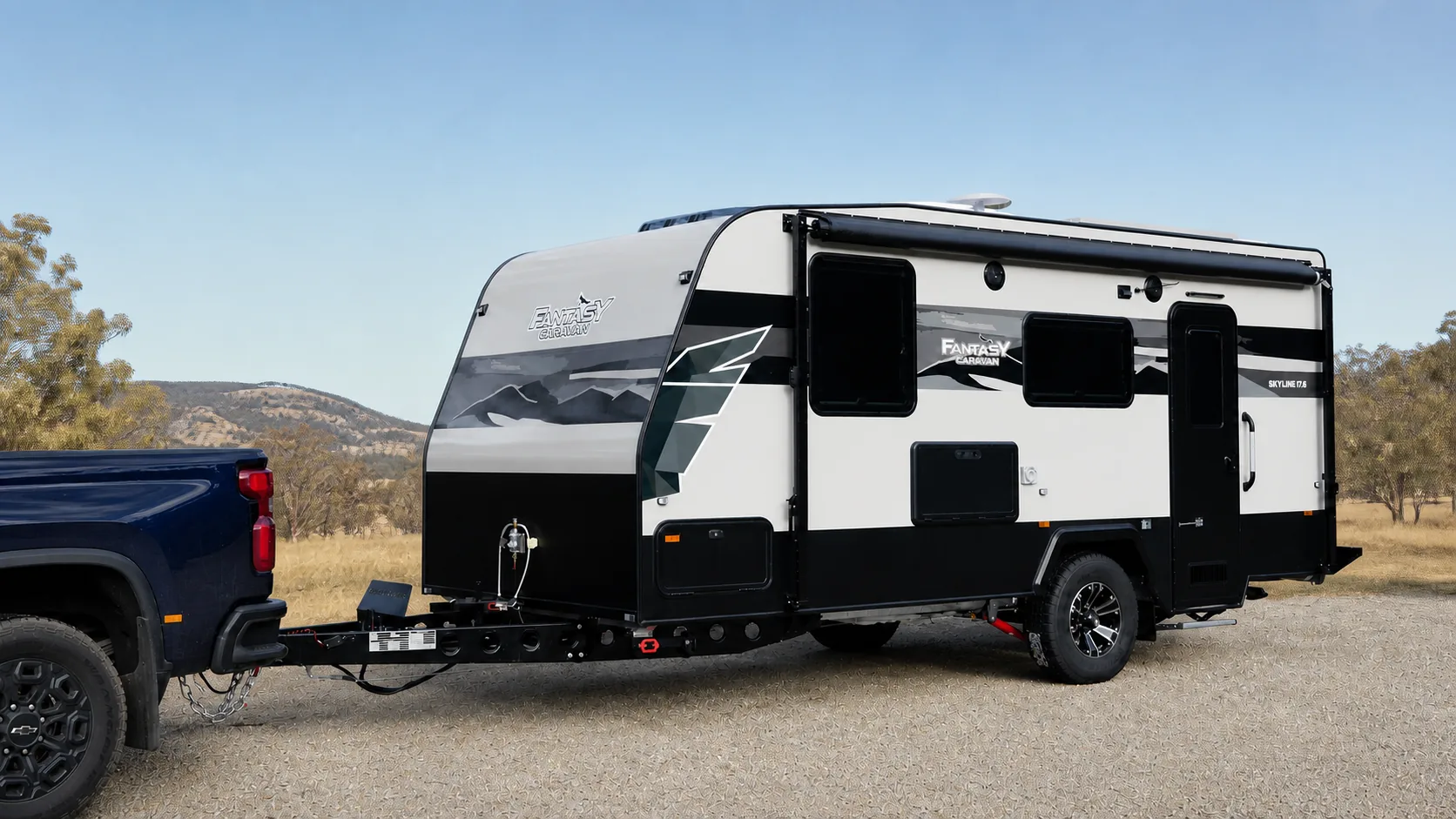
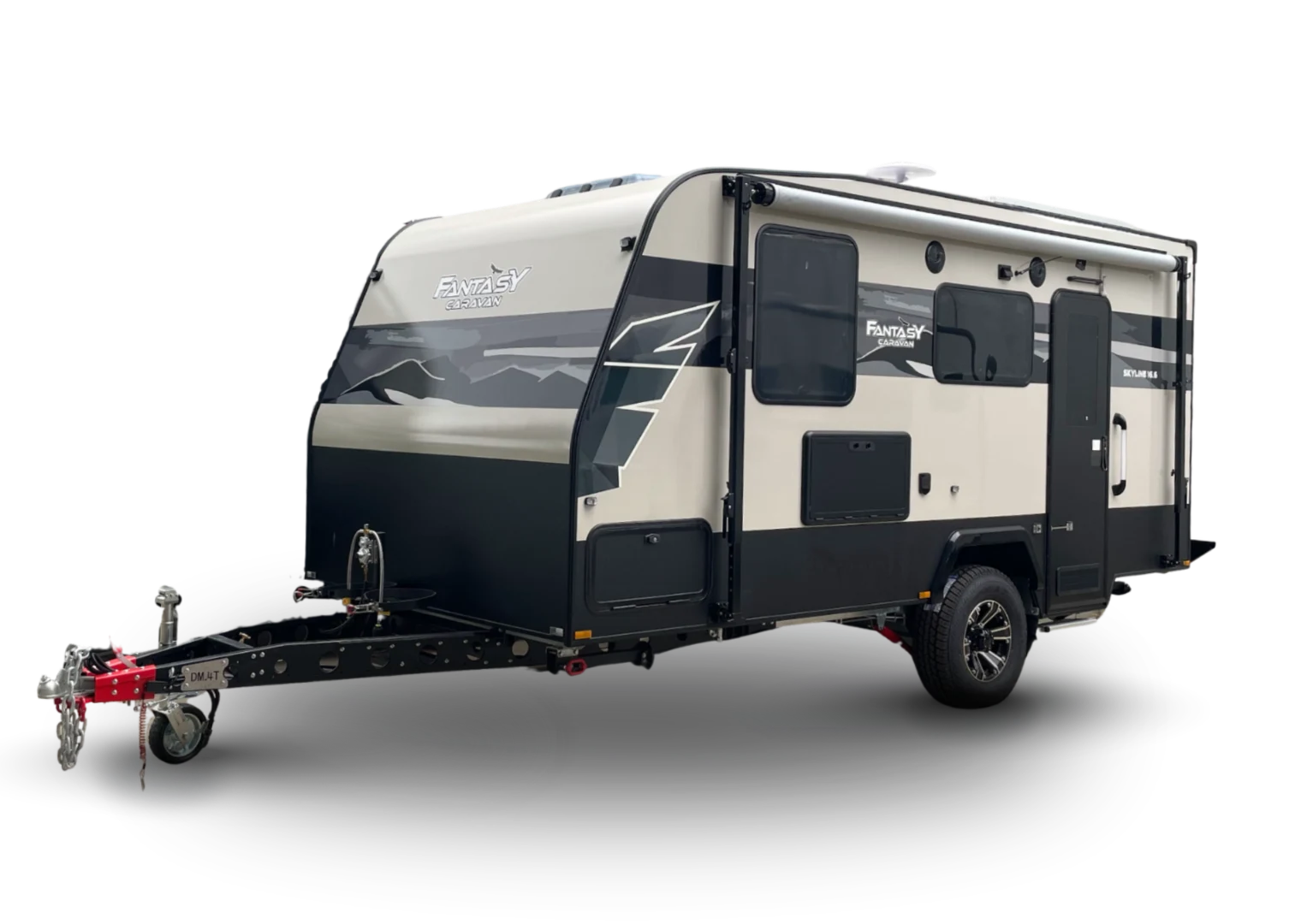
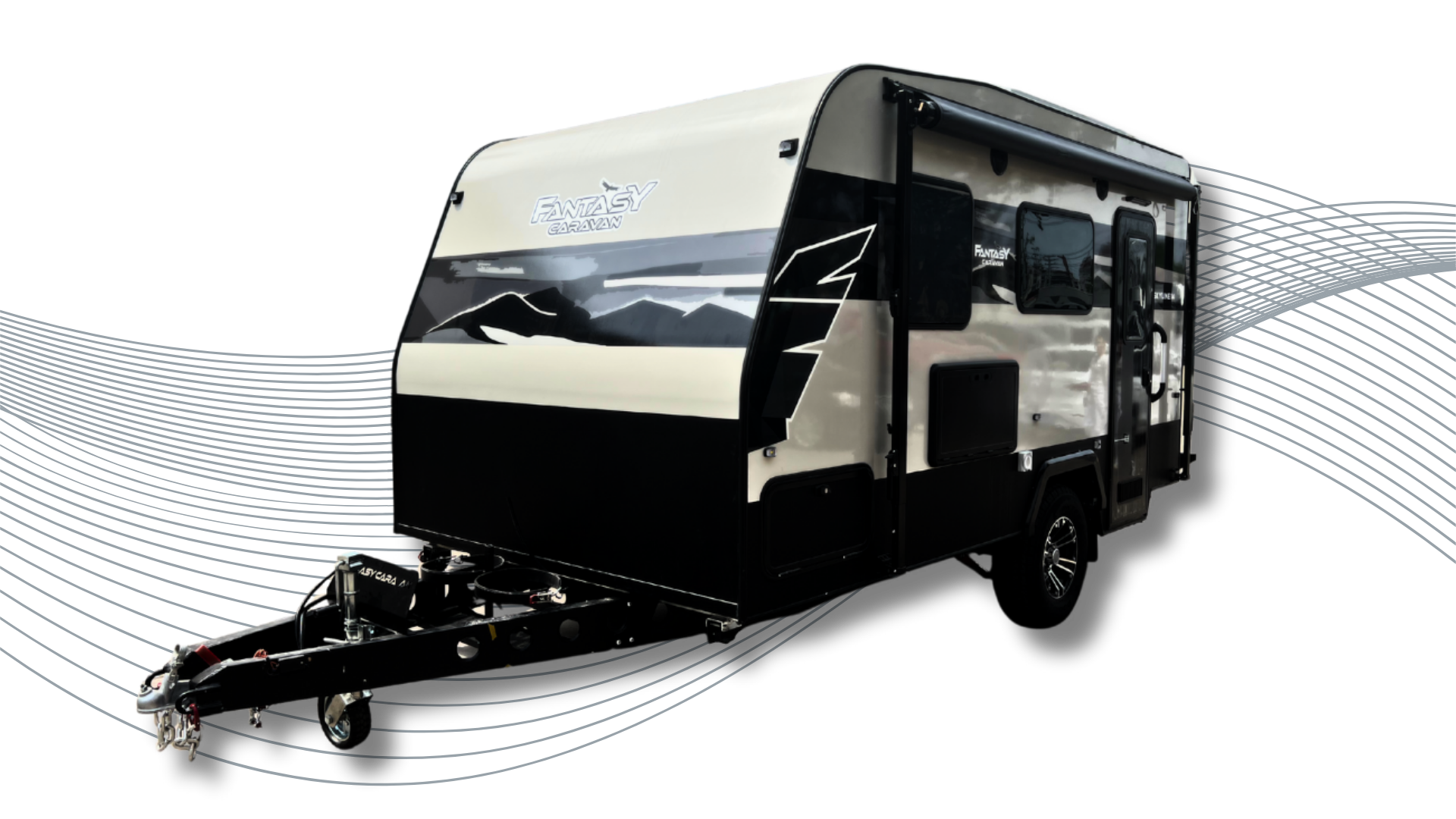
Look along the front. There is no seam. The front and rear walls are pressed as single composite panels, leaving fewer exposed joins and helping reduce the long-term risk of water ingress.
The clean side profile is easier to place when the access road tightens up — between branches, through a narrow gate or onto a compact site. Its smoother shape is also designed to reduce wind resistance when towing at highway speed.
The lower body carries a durable protective finish for the everyday scuffs that come with tighter access roads and campsite use, while keeping the Skyline’s exterior clean and considered.
The chassis rail carries a deliberate cut-out pattern. It was resolved in the engineering long before it was drawn, so the load-bearing structure underneath gives up nothing to get there.
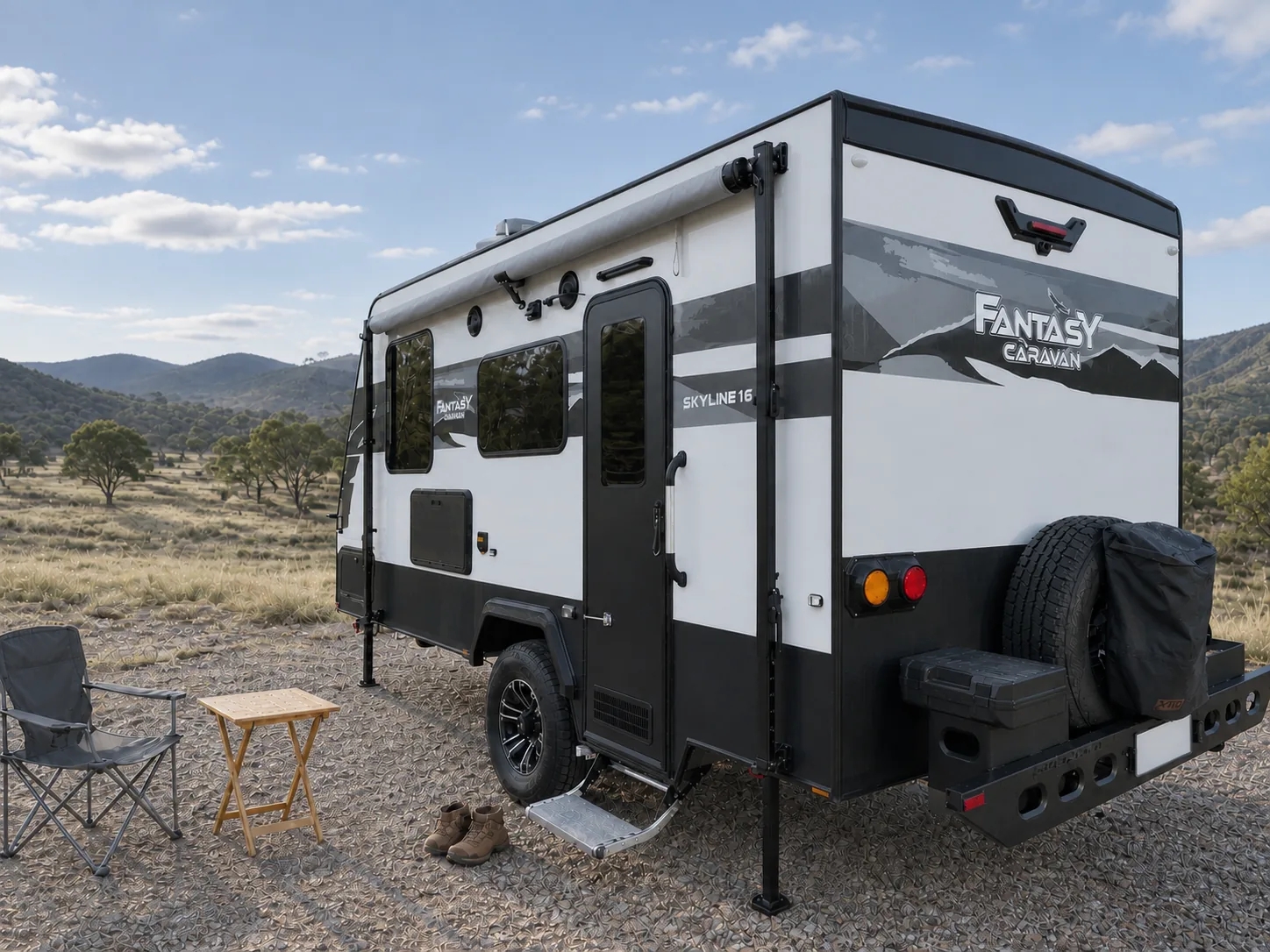
The entry door, grab handle and step make a clear arrival zone on the side of the van. It is the part you use first at every stop, so it should feel considered rather than added on.
A generously sized tunnel boot gives longer gear a space of its own, keeping bulky items out of the living area. On selected layouts, this zone can be specified instead as an optional exterior kitchen.
Interior
A layout that makes the everyday rhythm of travel feel natural.
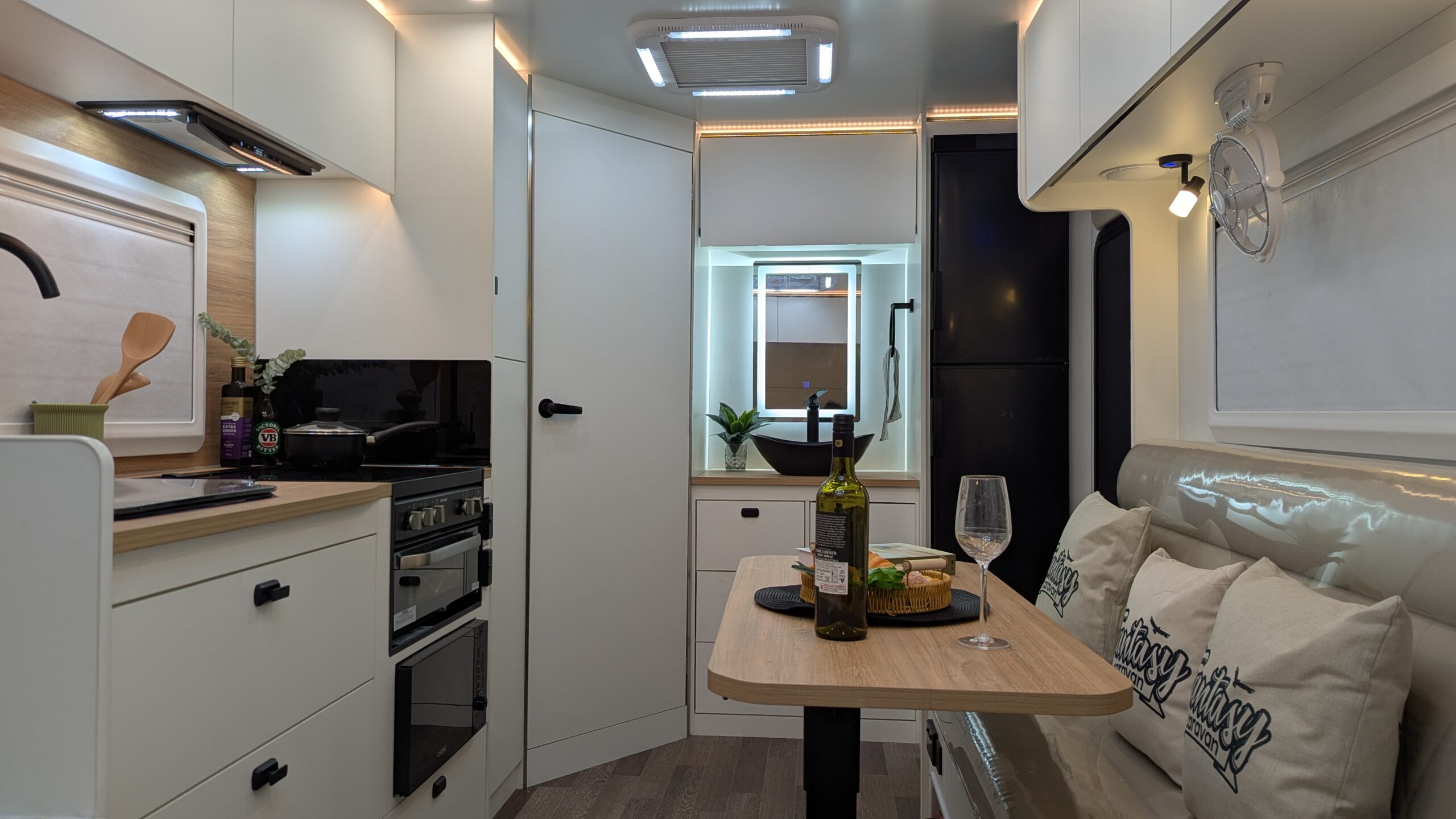
The right first impression is room, not compromise.
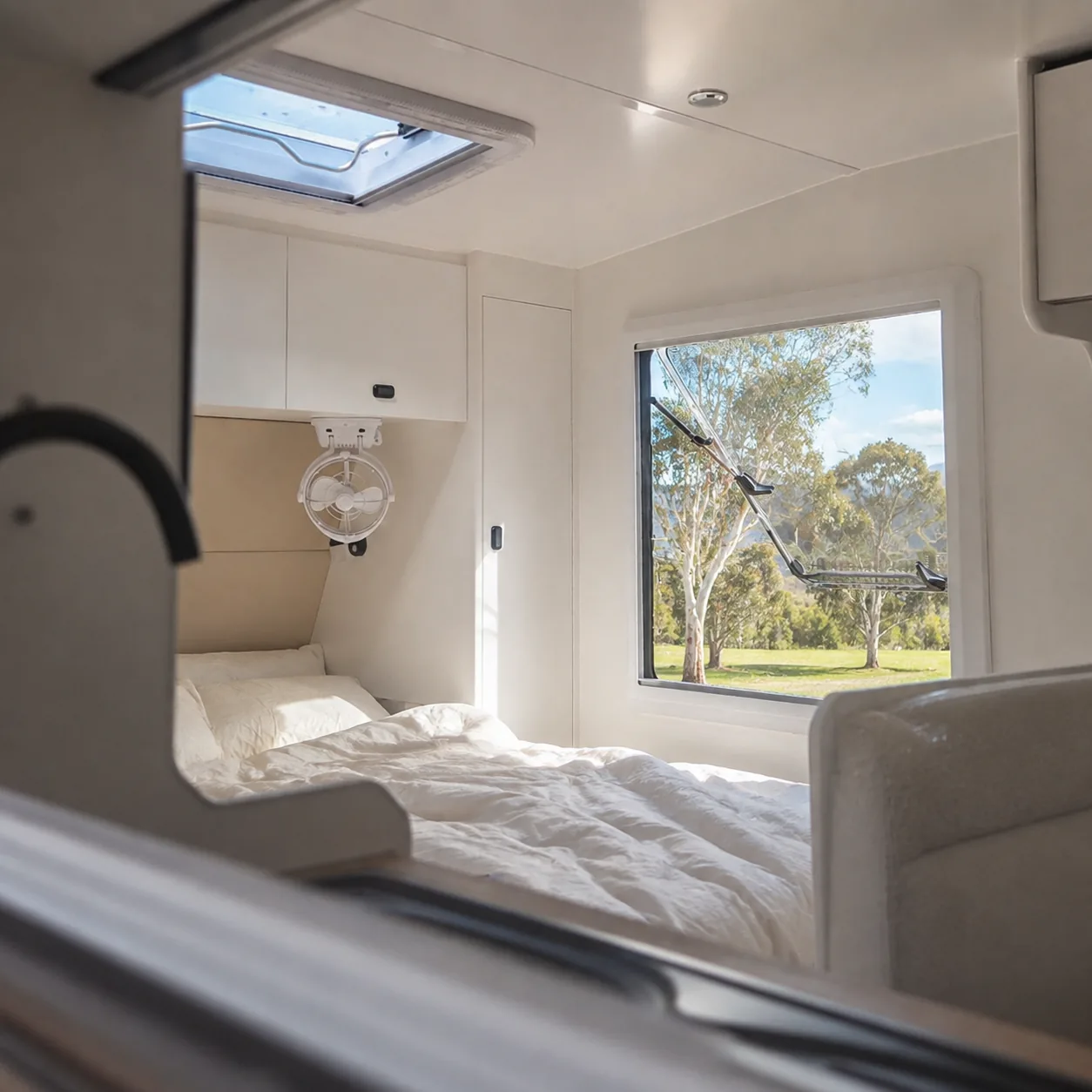
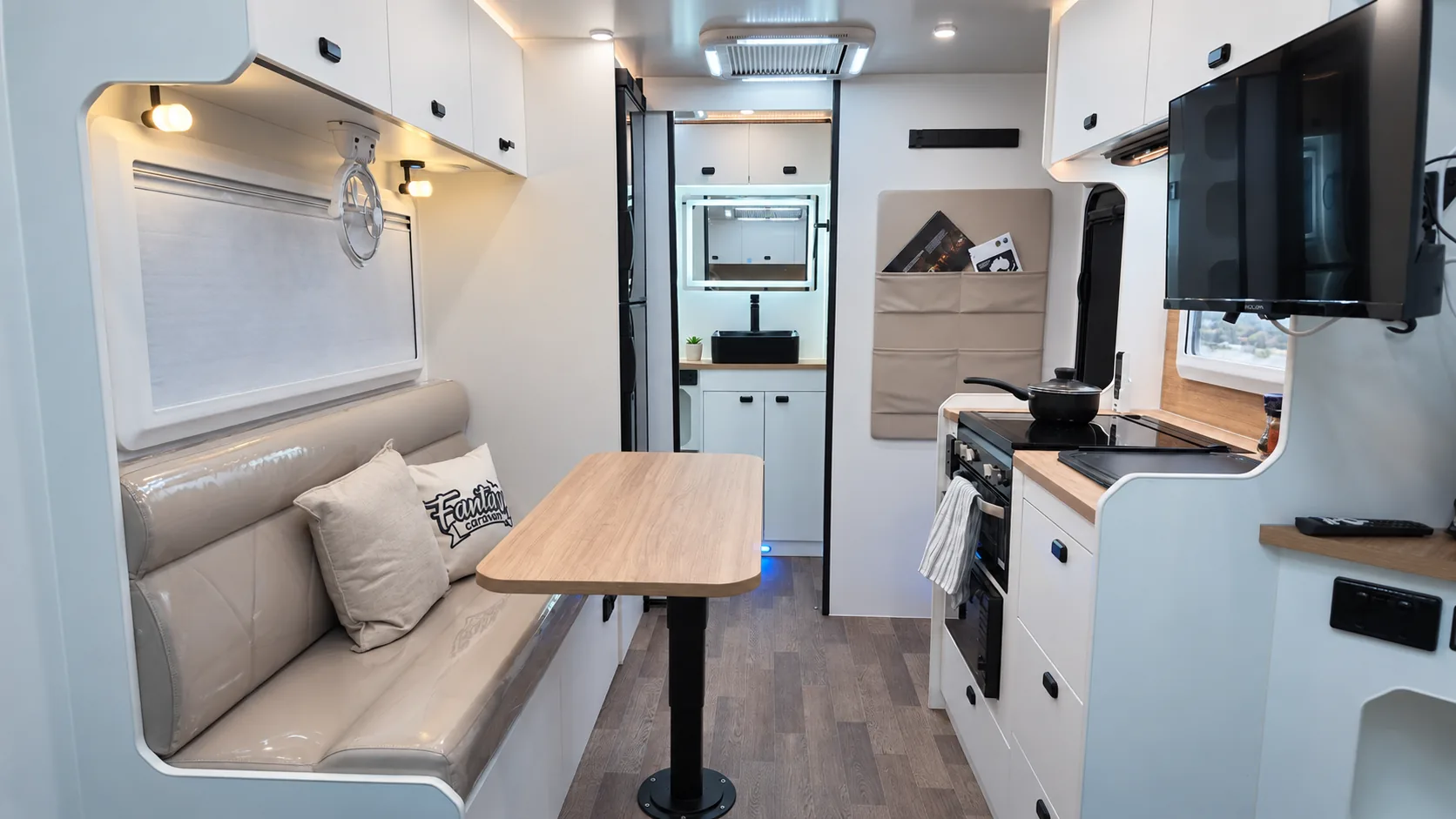
Natural light and a clear line of sight make the space feel welcoming from the first step inside.
The right first impression is room, not compromise.
Natural light and a clear line of sight make the space feel welcoming from the first step inside.
Sit down, look out and take in the place you stopped for – without leaving the living area.
A proper entry curtain helps the inside feel settled whenever you need a little separation.
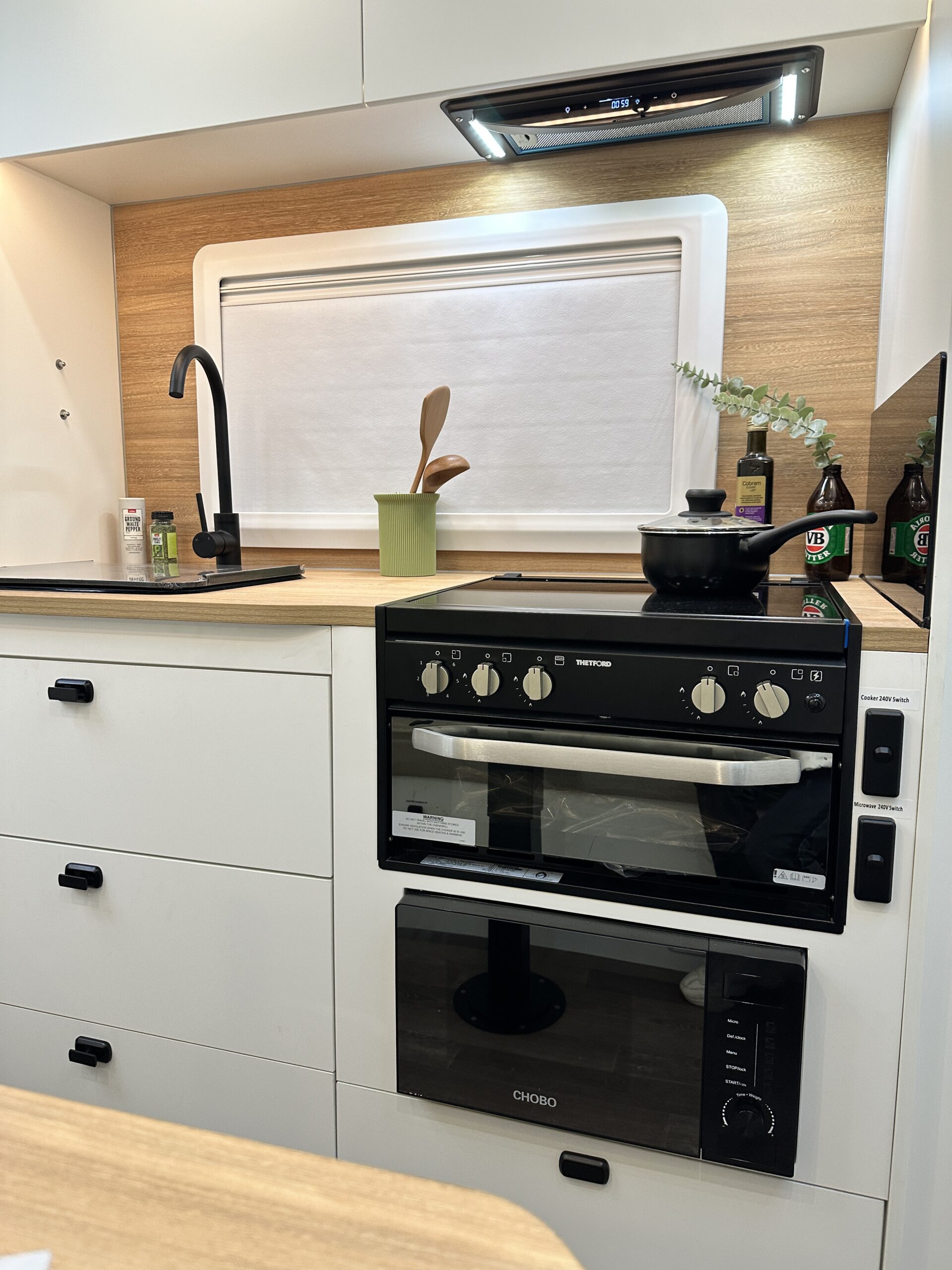
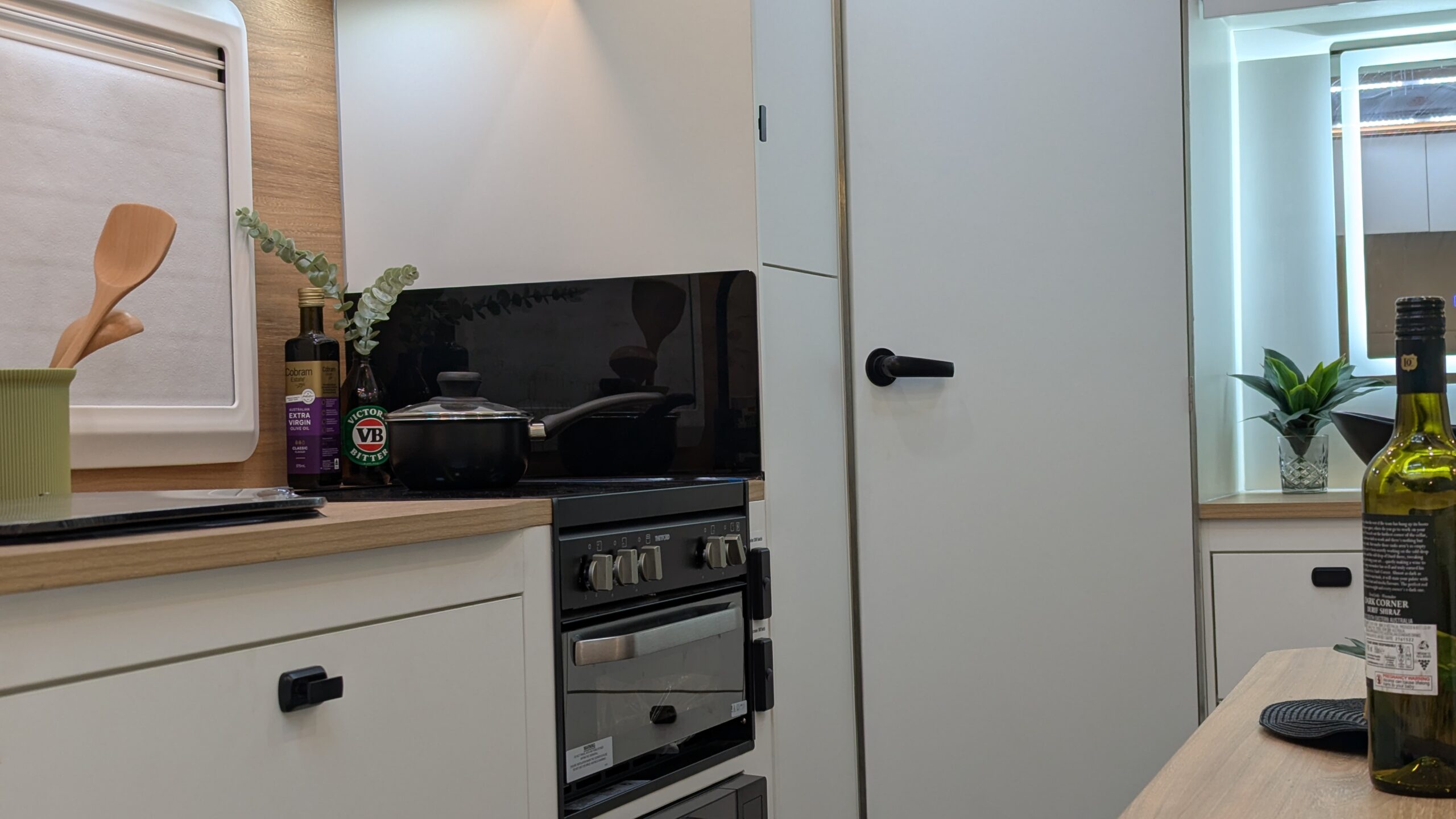
The kitchen and living space should work before you start thinking about them.
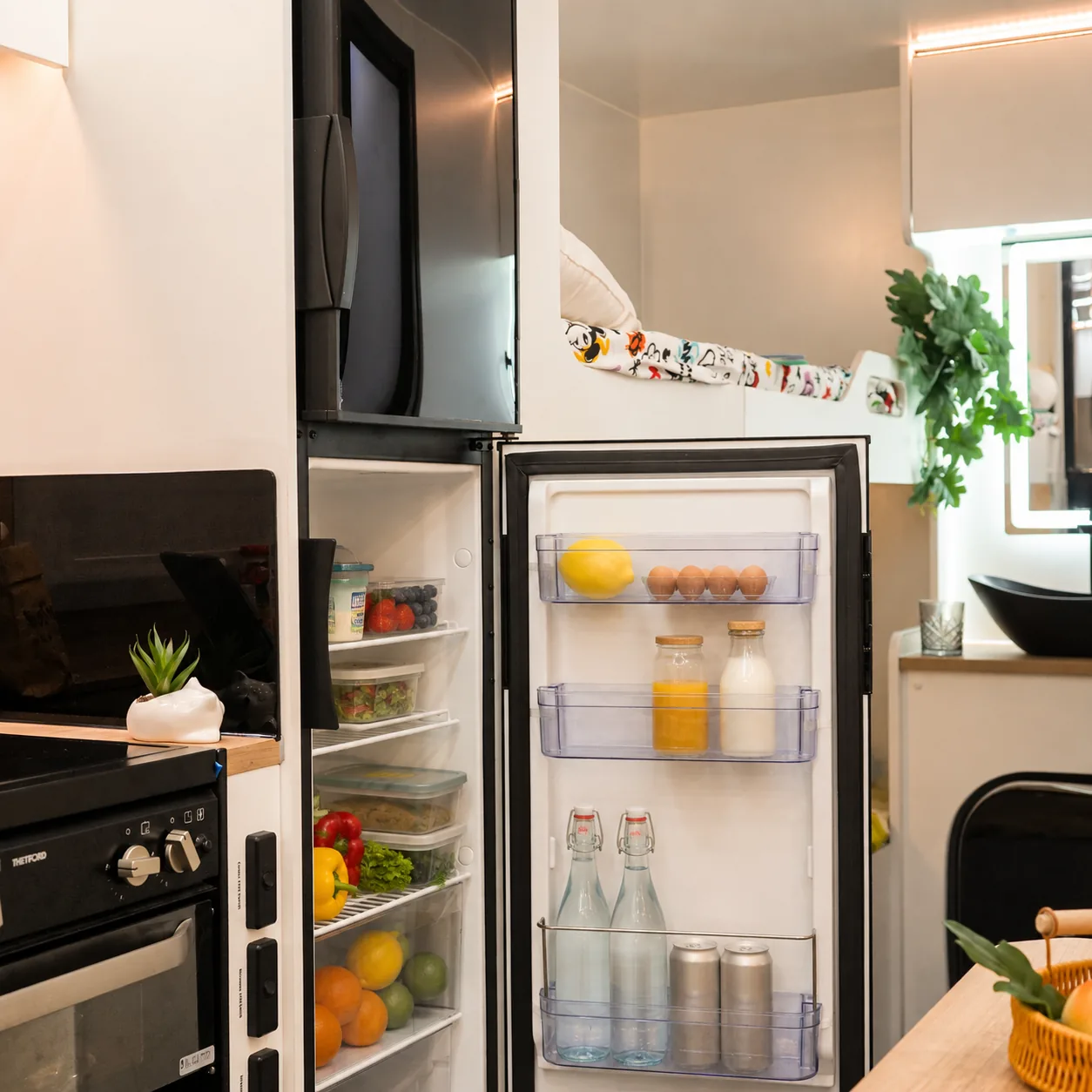
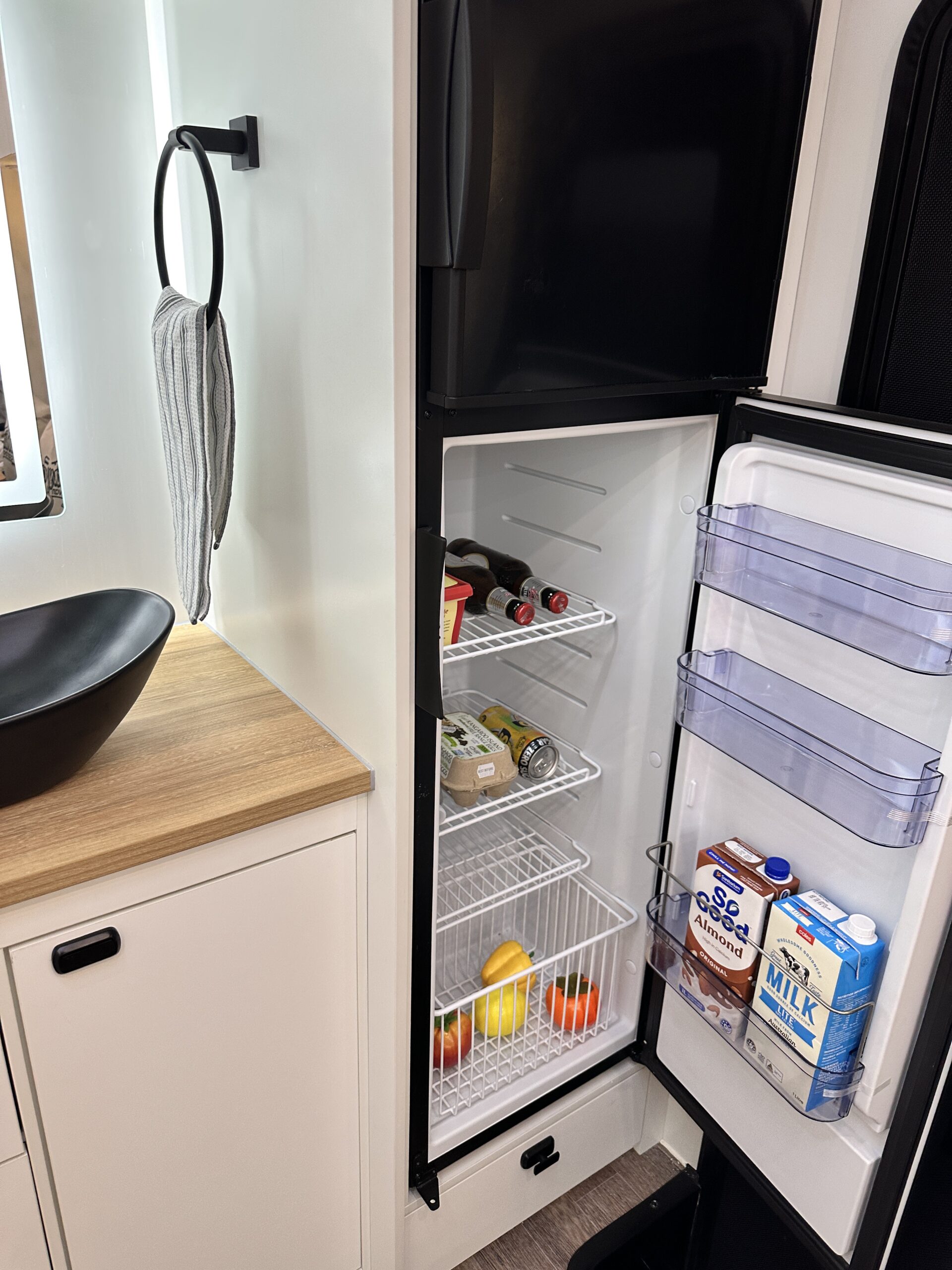
A full-height fridge leaves room for fresh food, drinks and the shop you actually planned to bring.
The kitchen and living space should work before you start thinking about them.
A full-height fridge leaves room for fresh food, drinks and the shop you actually planned to bring.
Four burners and a grill give dinner enough room to be dinner, not a one-pot workaround.
240V and 12V outlets at the lounge and bedside keep everyday charging close at hand.
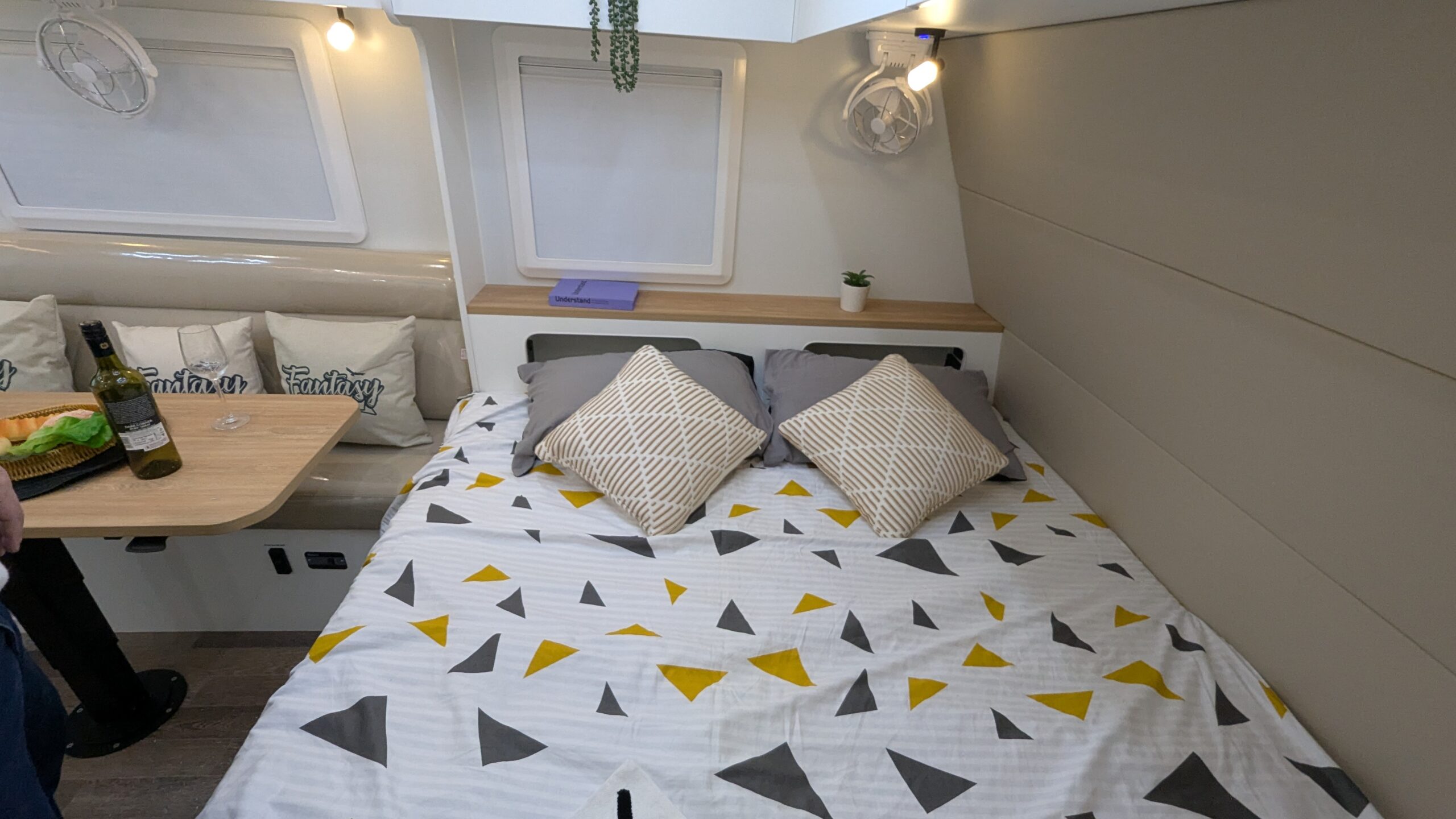
A long day should end comfortably, not with another compromise.
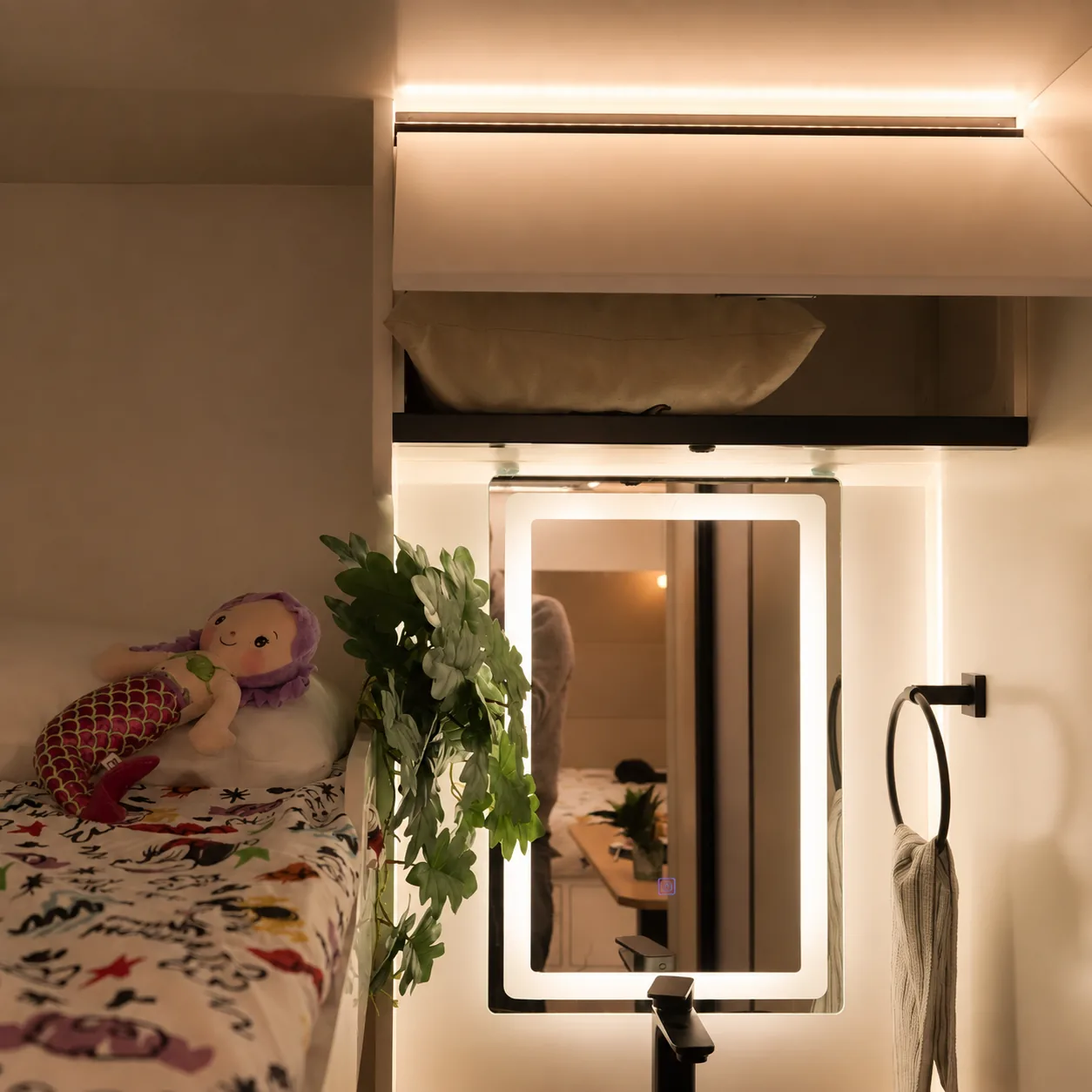
Direct task light and softer ambient light make the night routine calmer and easier to use.
A long day should end comfortably, not with another compromise.
Direct task light and softer ambient light make the night routine calmer and easier to use.
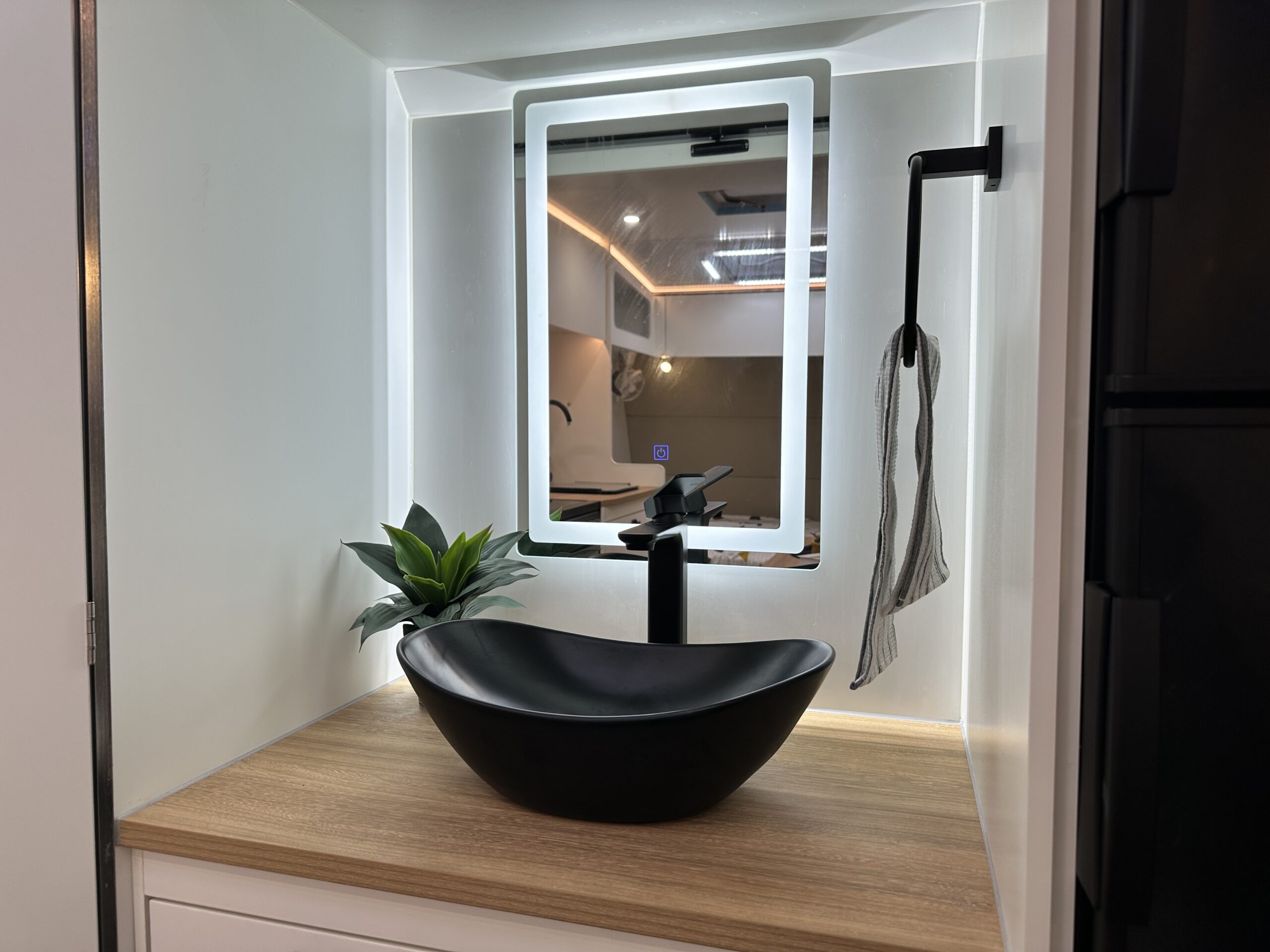
A proper shower space helps you reset after the road, without making the routine feel like a camp workaround.
Pillow-top comfort over a supportive base gives sleep the attention it deserves after a long day.
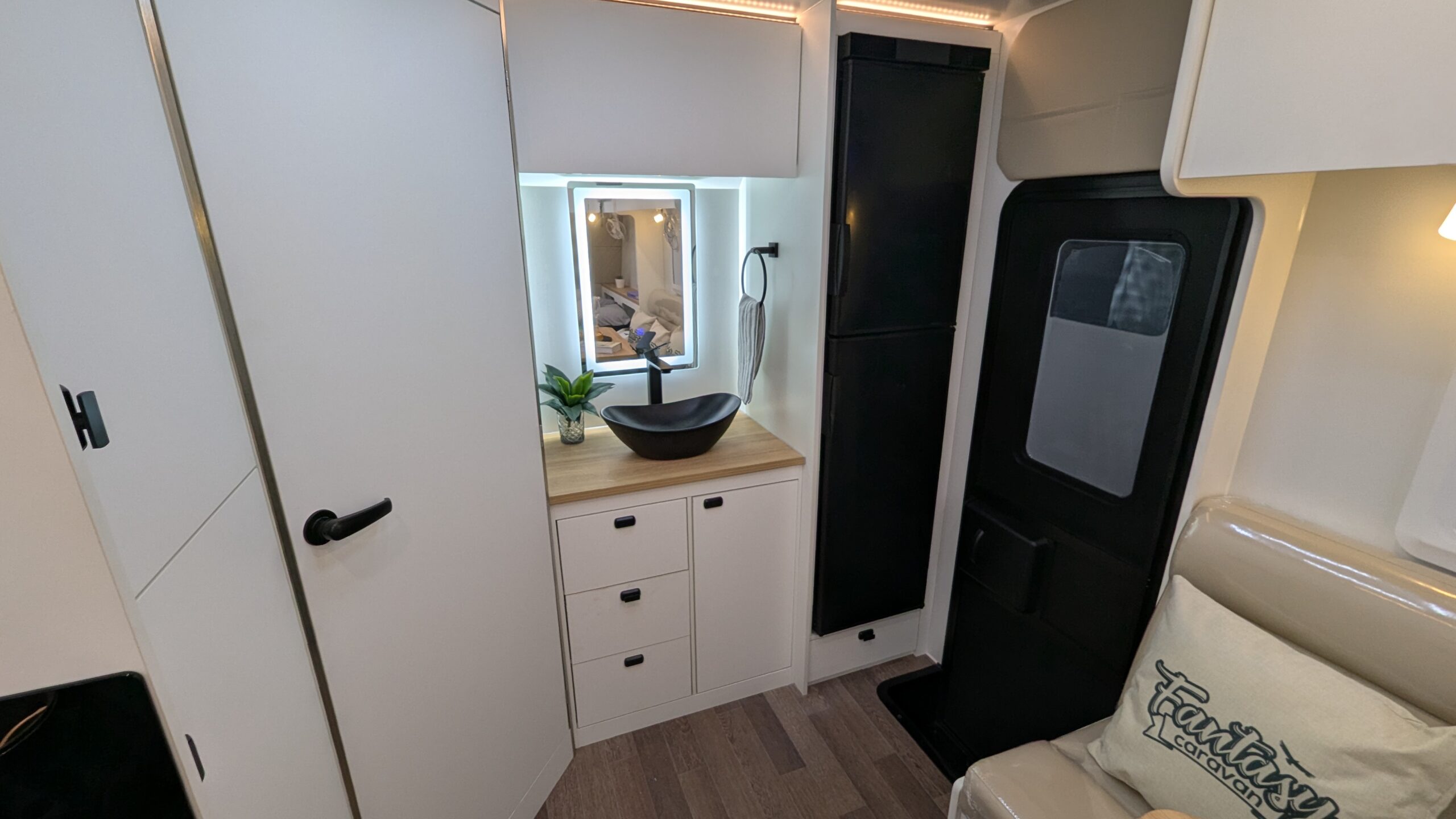
What you bring should have a place to go.
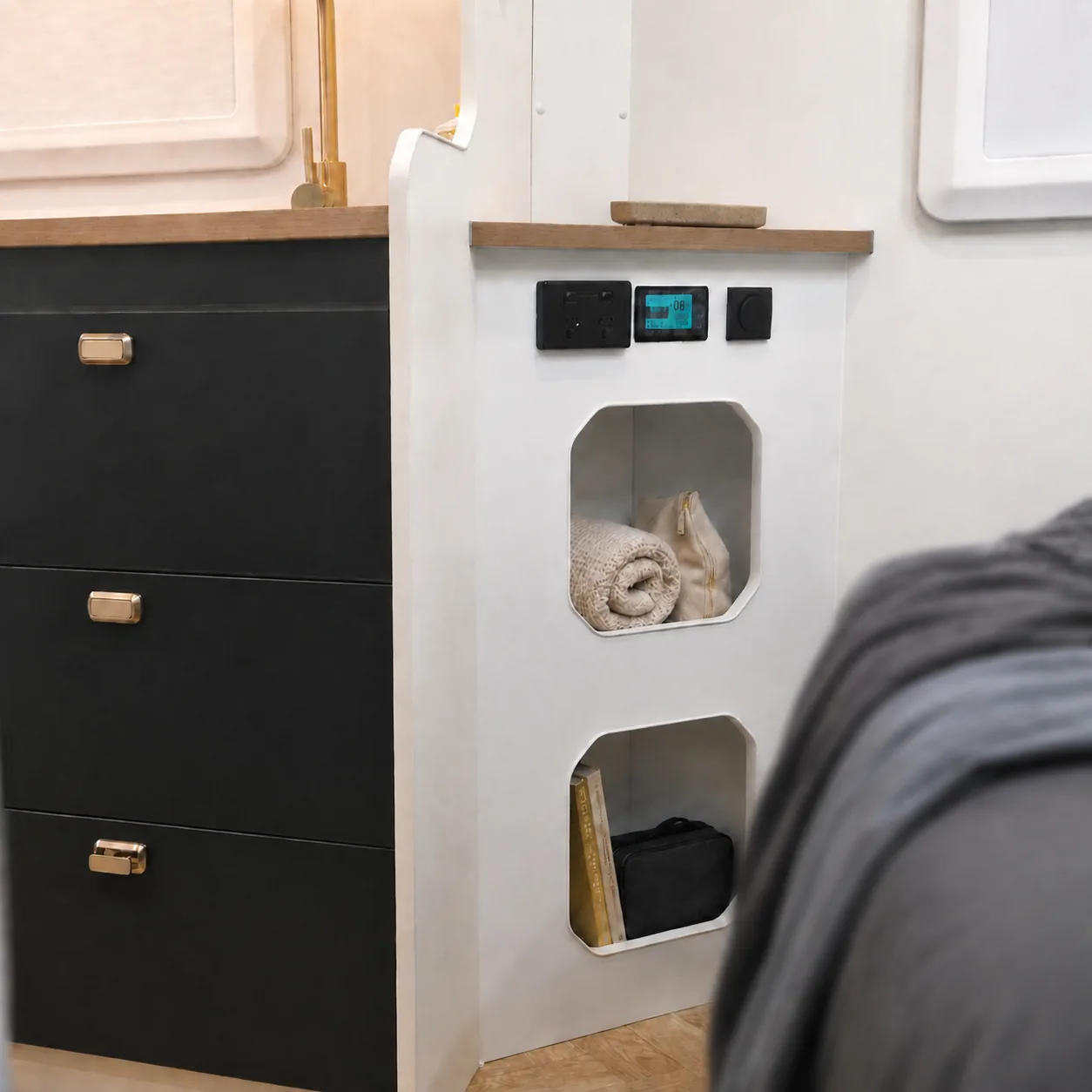
Well-used cupboards keep small essentials tidy, leaving the worktop and walkway clear.
What you bring should have a place to go.
Well-used cupboards keep small essentials tidy, leaving the worktop and walkway clear.
Day-to-day items can sit beneath the lounge, close enough to use and out of the living space.
Photos only get you so far. Bench height, bed access, whether you can get past someone in the walkway — those you have to stand in. · or call 1300 096 615
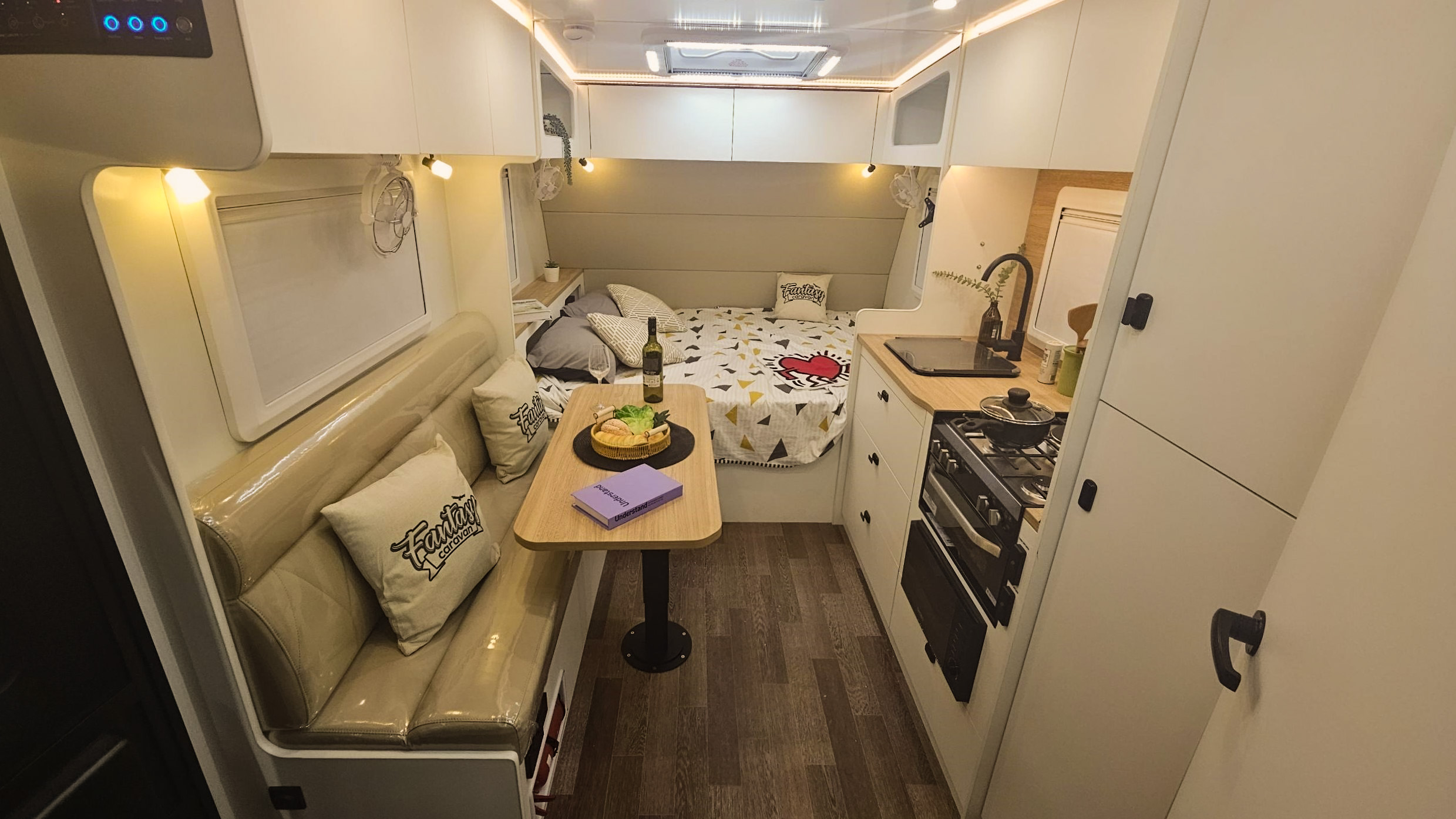

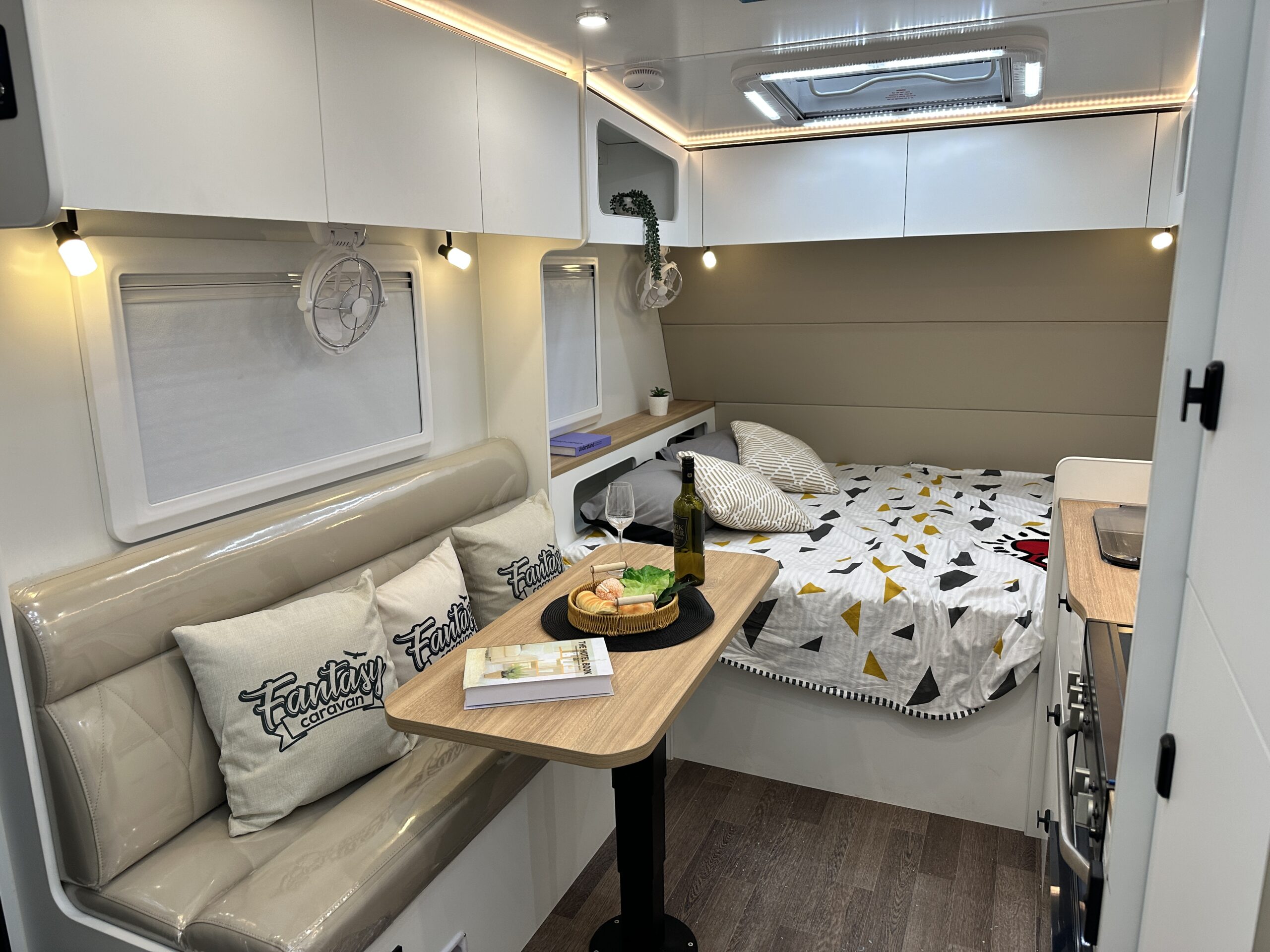

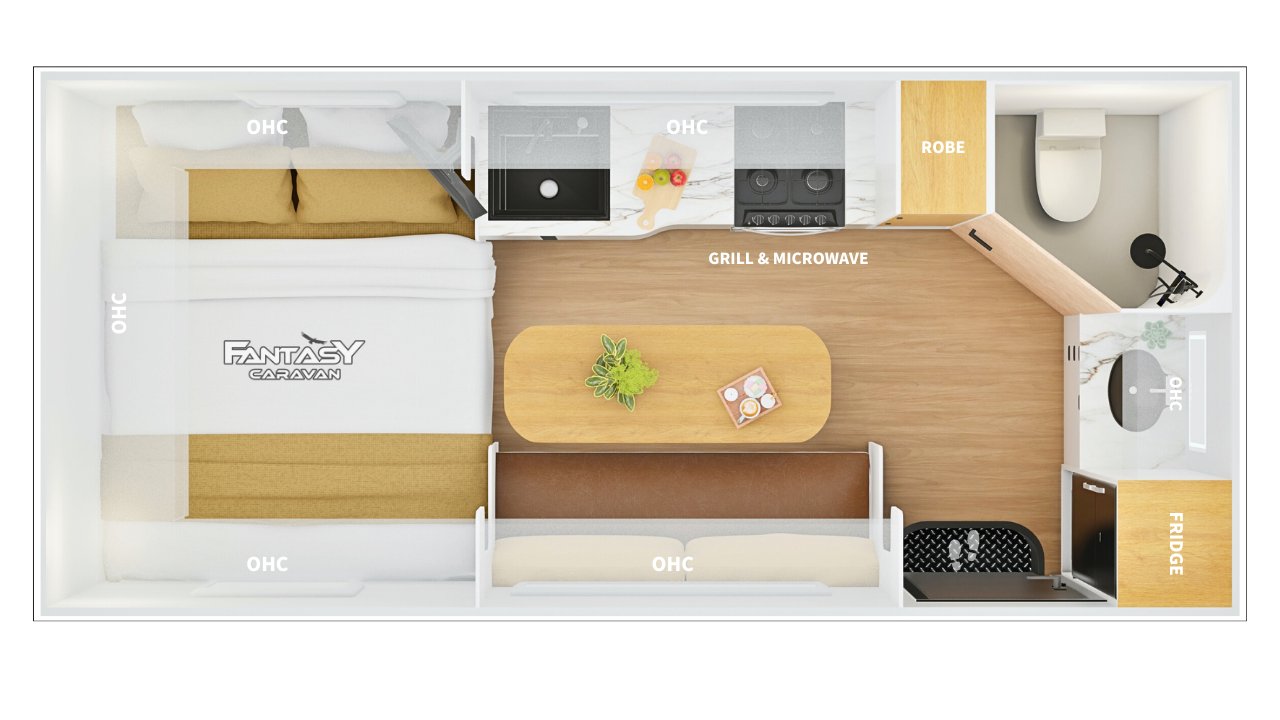
 Sleeps 2
 185L Fridge
 200AH Lithium
 400w Solar
| ATM | 2500 KG |
| Tare Mass | 1780 KG |
| Ball Weight | 120 KG |
| Length | 6525(mm) |
| Width | 2430(mm) |
| Height | 3065(mm) |
Energy & Control
Keep everyday life moving away from powered sites with a complete energy system, where charging, storage and control work together as one.
A 40A DC-to-DC charger turns driving time into charge time, keeping energy coming in while you cover the kilometres.
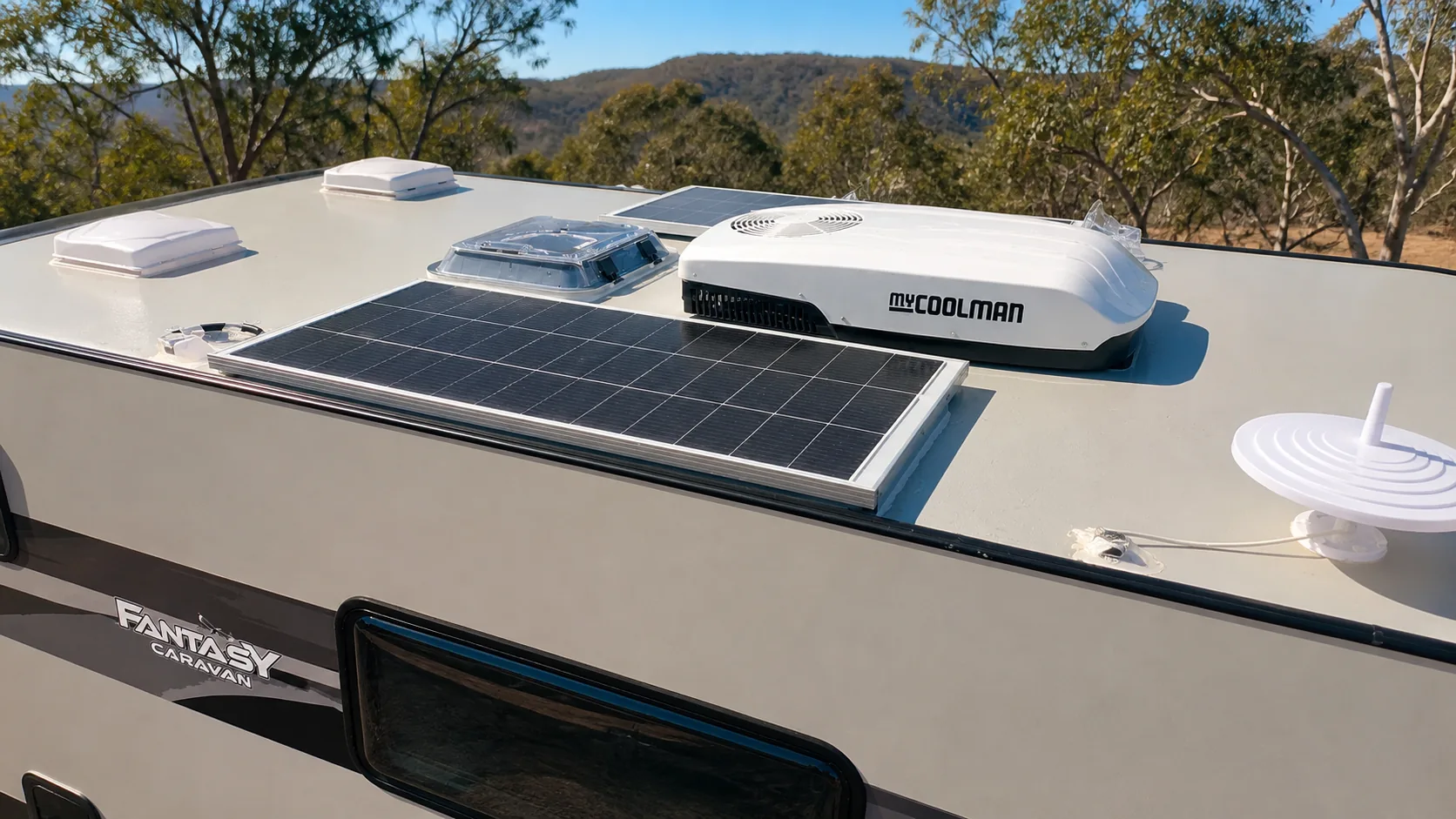
400W of roof-mounted solar continues to top up the system while you are stopped, without unfolding panels or chasing the sun.
A 200Ah lithium battery and 2000W inverter work with the charging system so the things you use every day can keep working away from a powered site.
At a powered site or at home, the 15A inlet and RCD protection let you connect once and leave the sensible work to the system.
The Projecta PM200 and smart control bring power, water, lights and system status into one clear control point, so you do not need to hunt through cupboards.
240V and 12V charging are placed at the bed and lounge, with zoned lighting for cooking, reading and getting up after dark.
A 200Ah lithium battery and 2000W inverter work with the charging system so the things you use every day can keep working away from a powered site.
System duration varies with appliance use, travel pattern and weather.
Semi off-road capability
Built for the highway, the last kilometre and the campsite in between.
Most of your kilometres happen here.
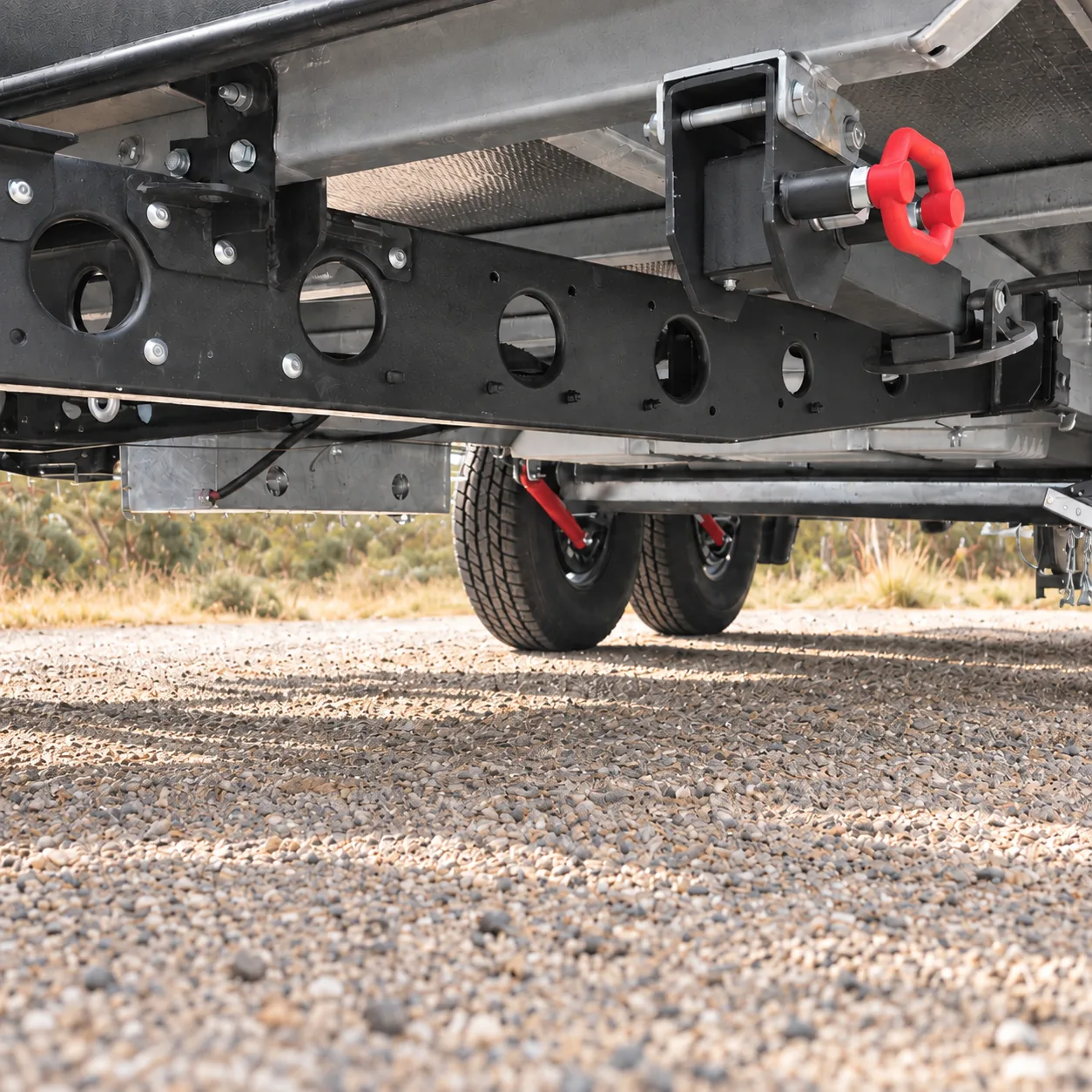
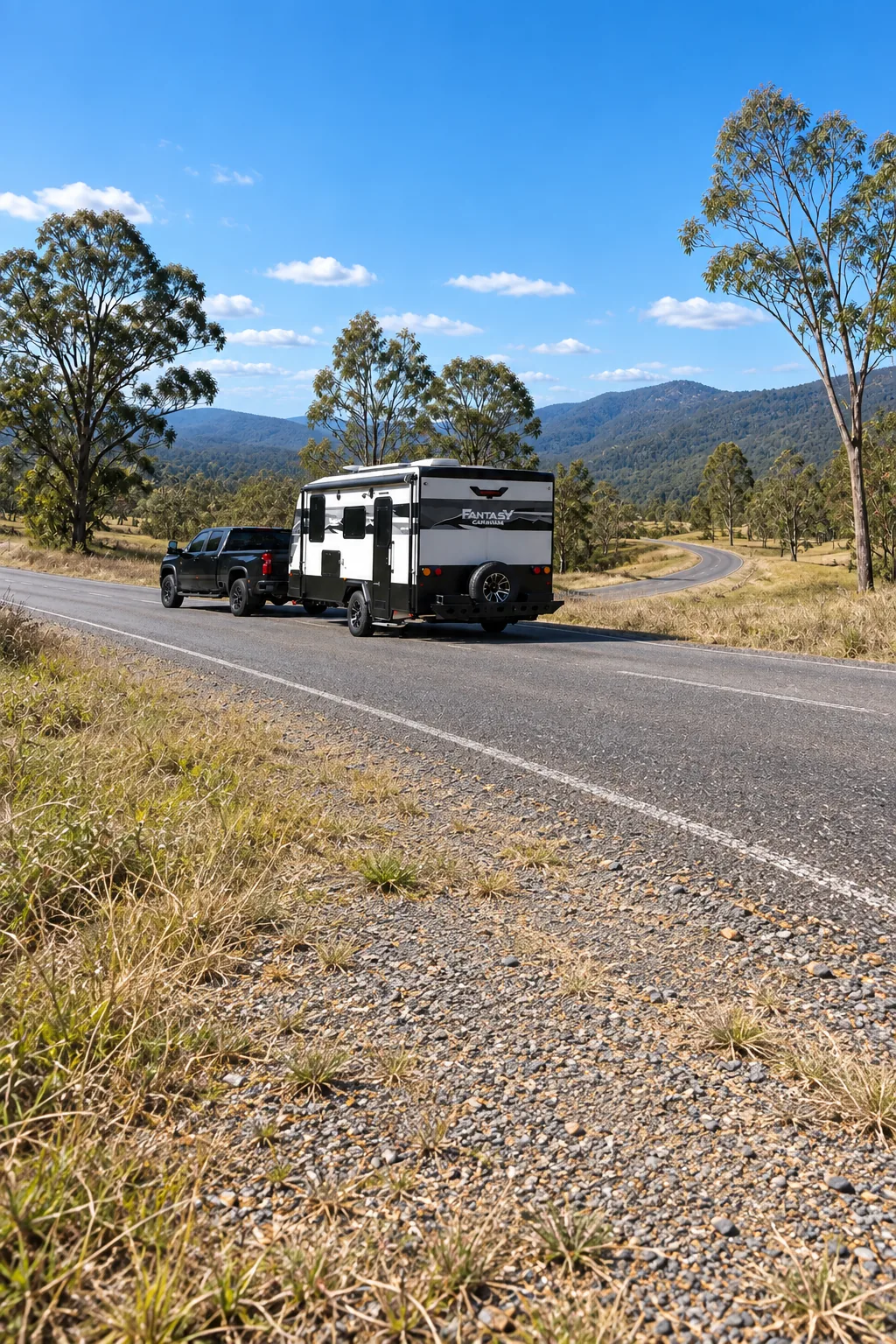
Torsion axle suspension lets the left and right wheels answer the surface more independently, helping the tow stay composed through the kilometres.
Most of your kilometres happen here.
Torsion axle suspension lets the left and right wheels answer the surface more independently, helping the tow stay composed through the kilometres.
The streamlined exterior helps air move more cleanly around the caravan, supporting a calmer towing feel across long highway days.
The road gets rougher. The trip keeps going.
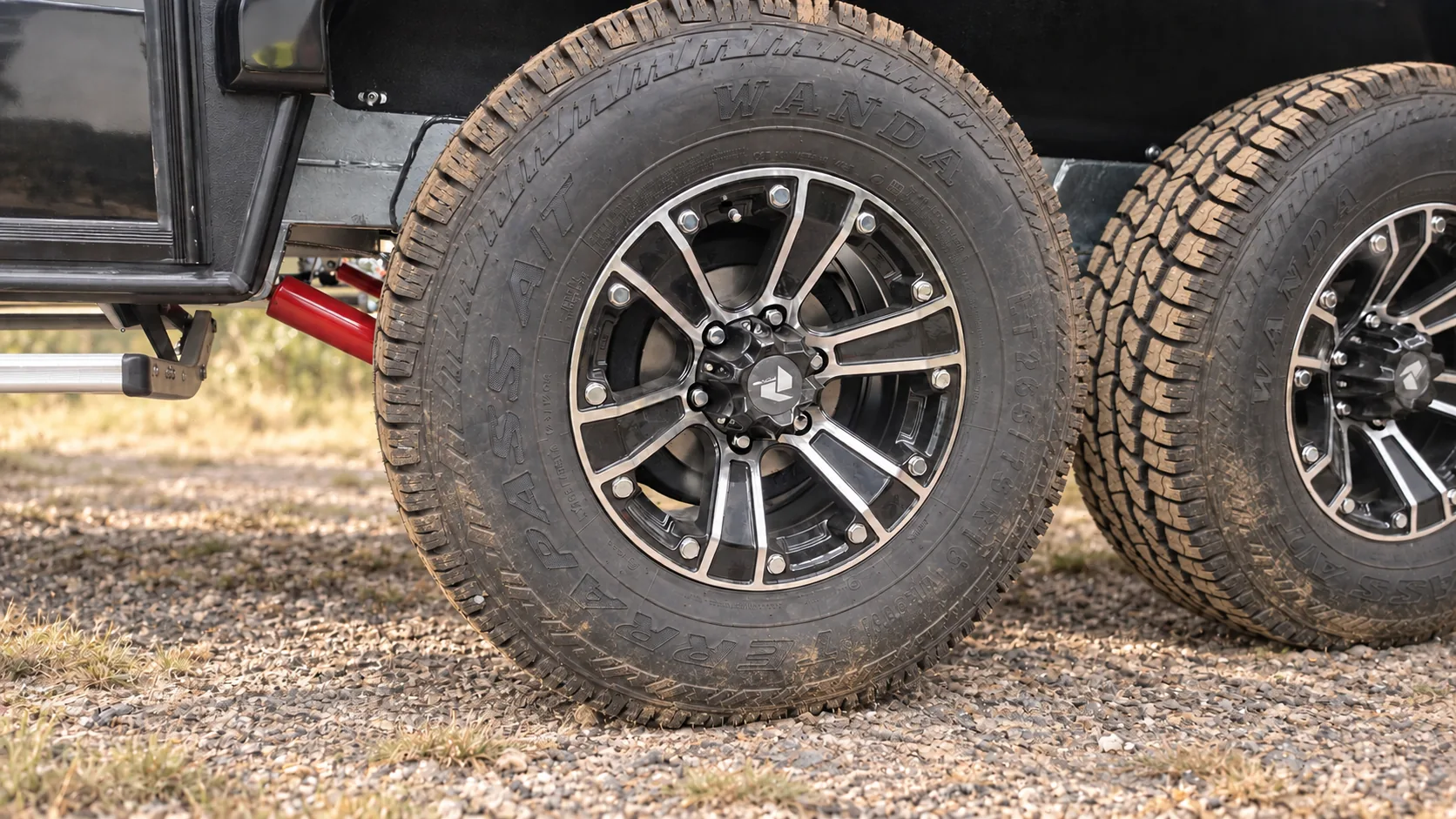
A 2.5-inch lift and 16-inch AT tyres give more clearance and grip margin for ruts, uneven entries and maintained gravel access roads.
The road gets rougher. The trip keeps going.
A 2.5-inch lift and 16-inch AT tyres give more clearance and grip margin for ruts, uneven entries and maintained gravel access roads.
Axle shock absorbers help control repeated corrugations, so the van tracks more steadily when the road stops being smooth.
Tired, late, and still in control.
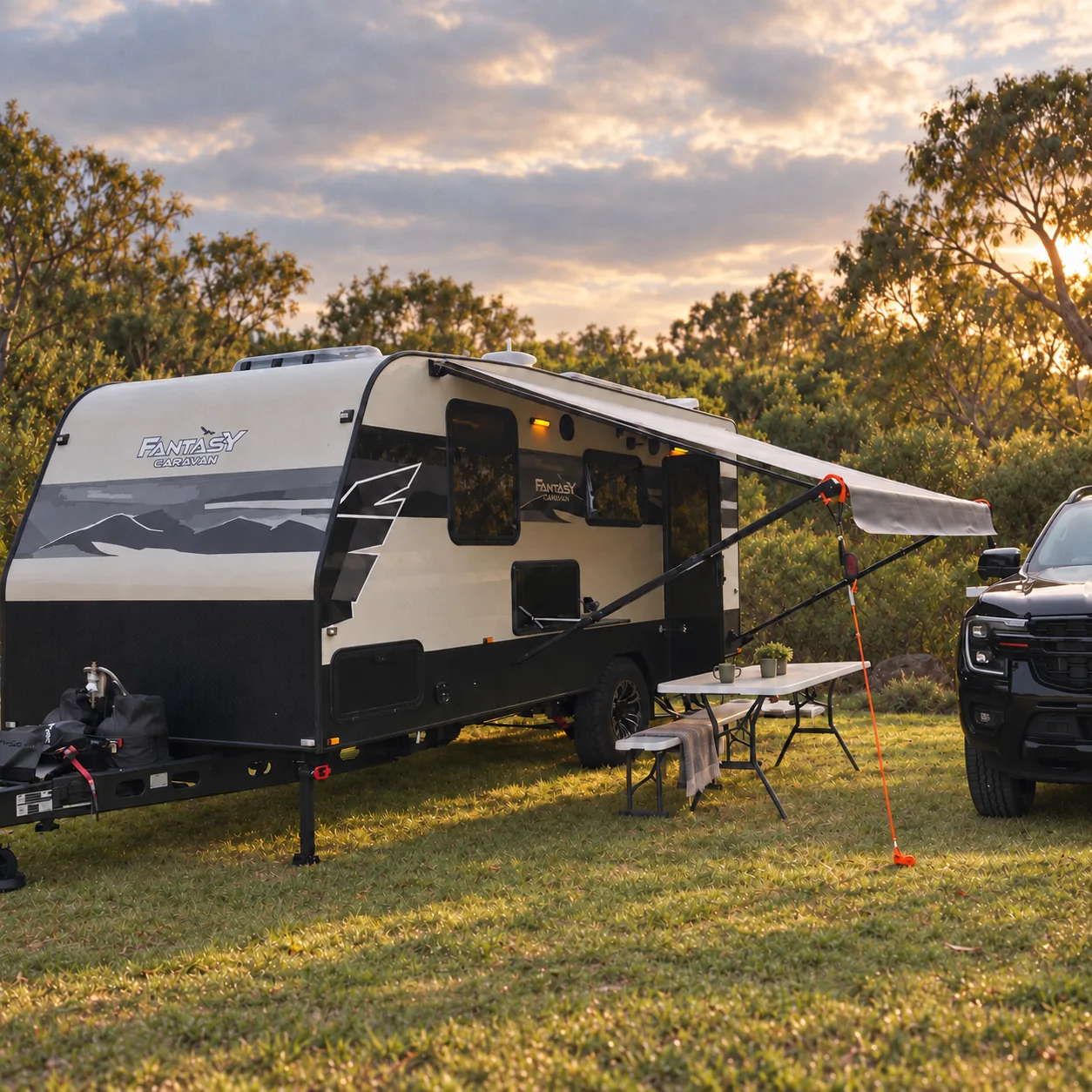
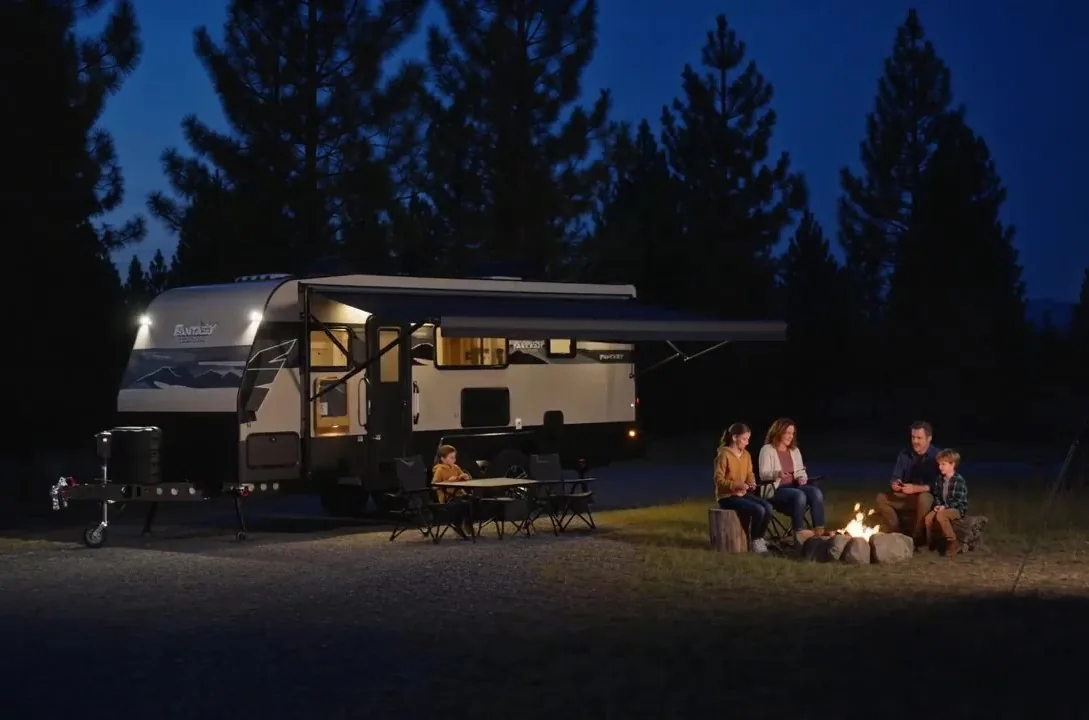
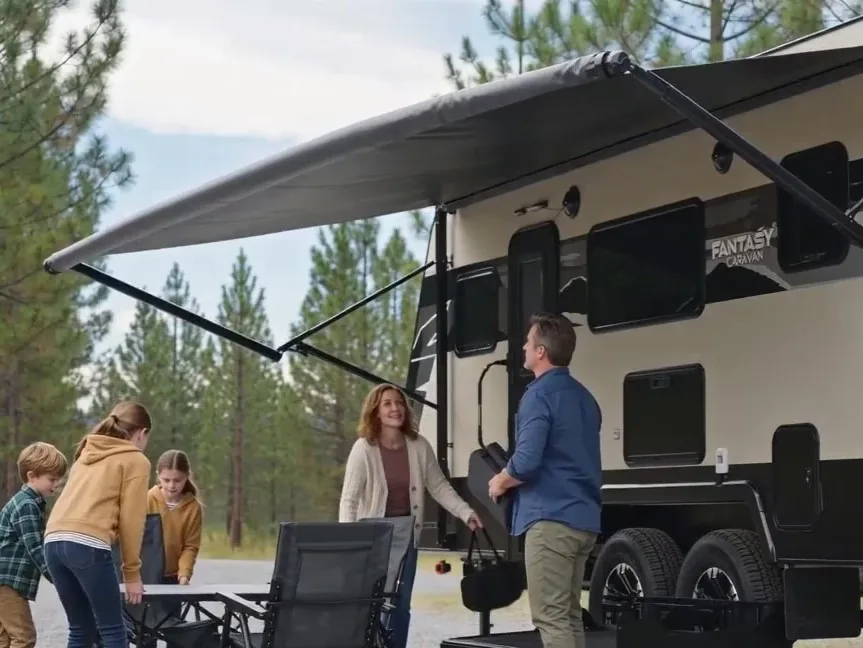
Open the awning, set down a chair and make the space outside feel like part of camp within minutes.
Tired, late, and still in control.
Open the awning, set down a chair and make the space outside feel like part of camp within minutes.
A rear camera gives you a clearer view of an unfamiliar site, so backing in does not depend on someone standing behind the van.
What stays with you
One touring system above the wheels and underneath them, ready for the last stretch and the years after it.
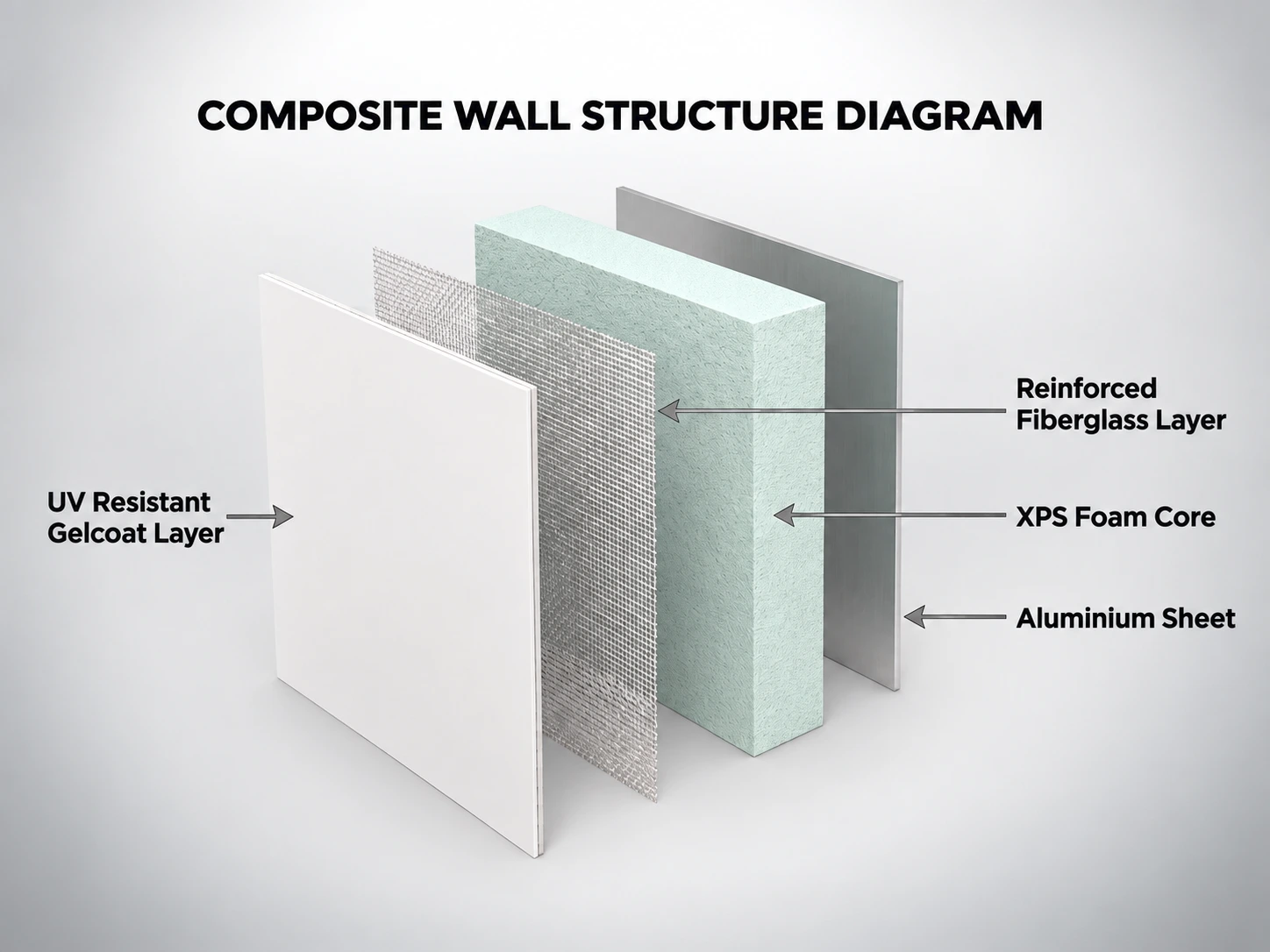
A timberless sandwich-panel wall system pairs a fibreglass outer skin, XPS insulation and aluminium framing – bringing exterior finish, insulation and structural support together in one body system. Heat-resistant gelcoat and resin help the exterior stay composed under long summer sun.
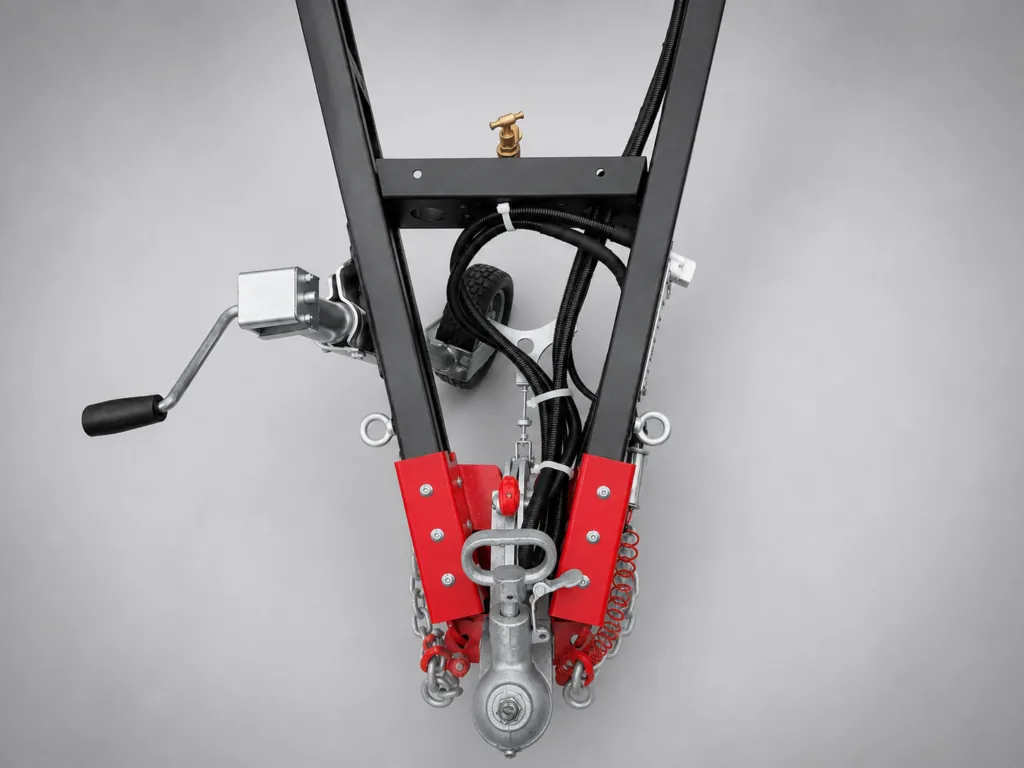
An upgraded box-section chassis and single-piece Q550 drawbar carry the loads where they concentrate. Selective lightening keeps unnecessary mass out, while hot-dip galvanising and a black coating protect the structure underneath.
Use depends on the selected model, load, tow vehicle and road conditions.
Make it yours
Choose your model, layout, interior colour, battery and options in our build tool, and get a live build price as you go.
Living with it
Small details that make arrival, setup and everyday living easier.
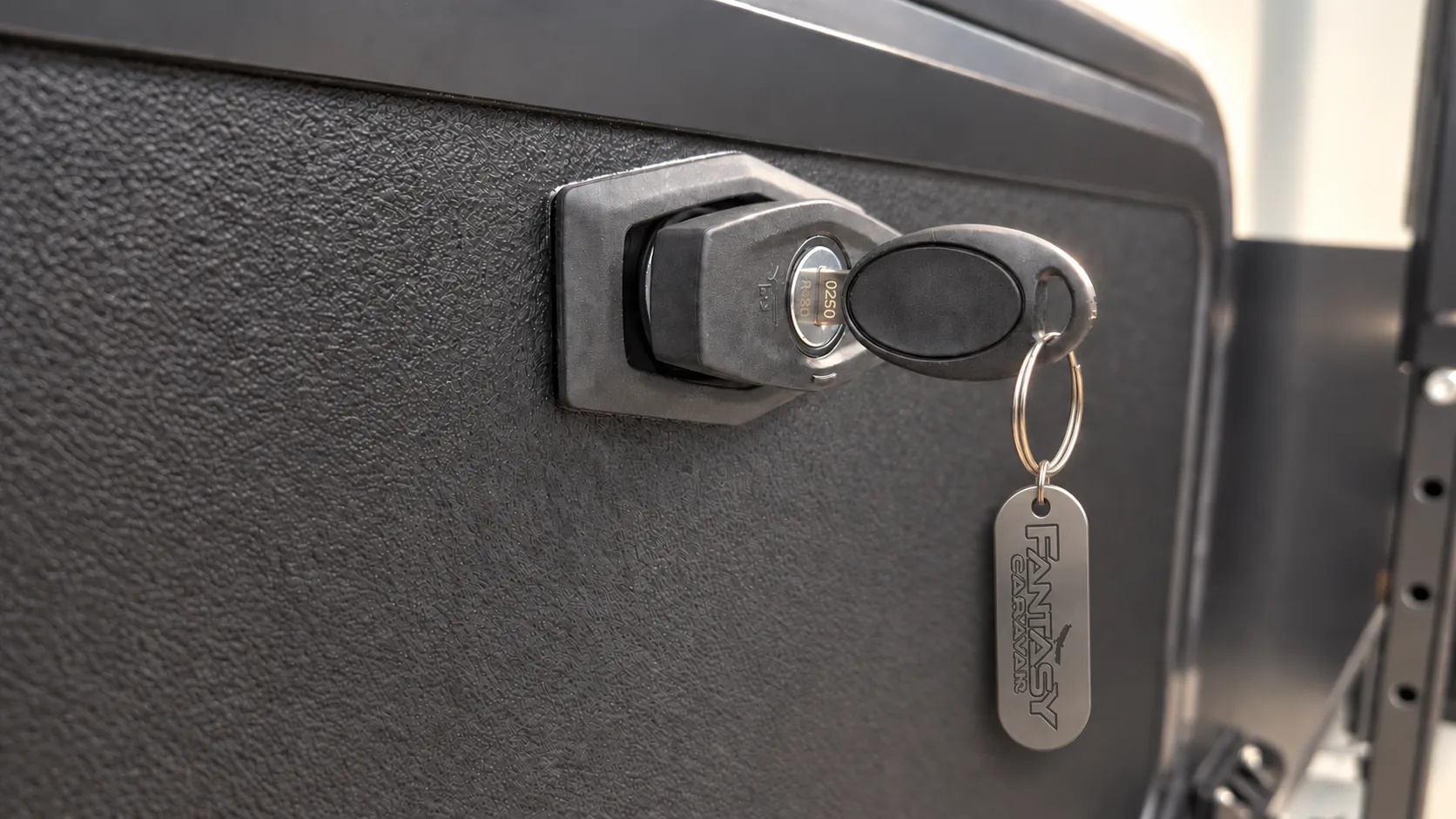
Every exterior hatch except the water filler works from the same key, so the simple jobs stay simple.
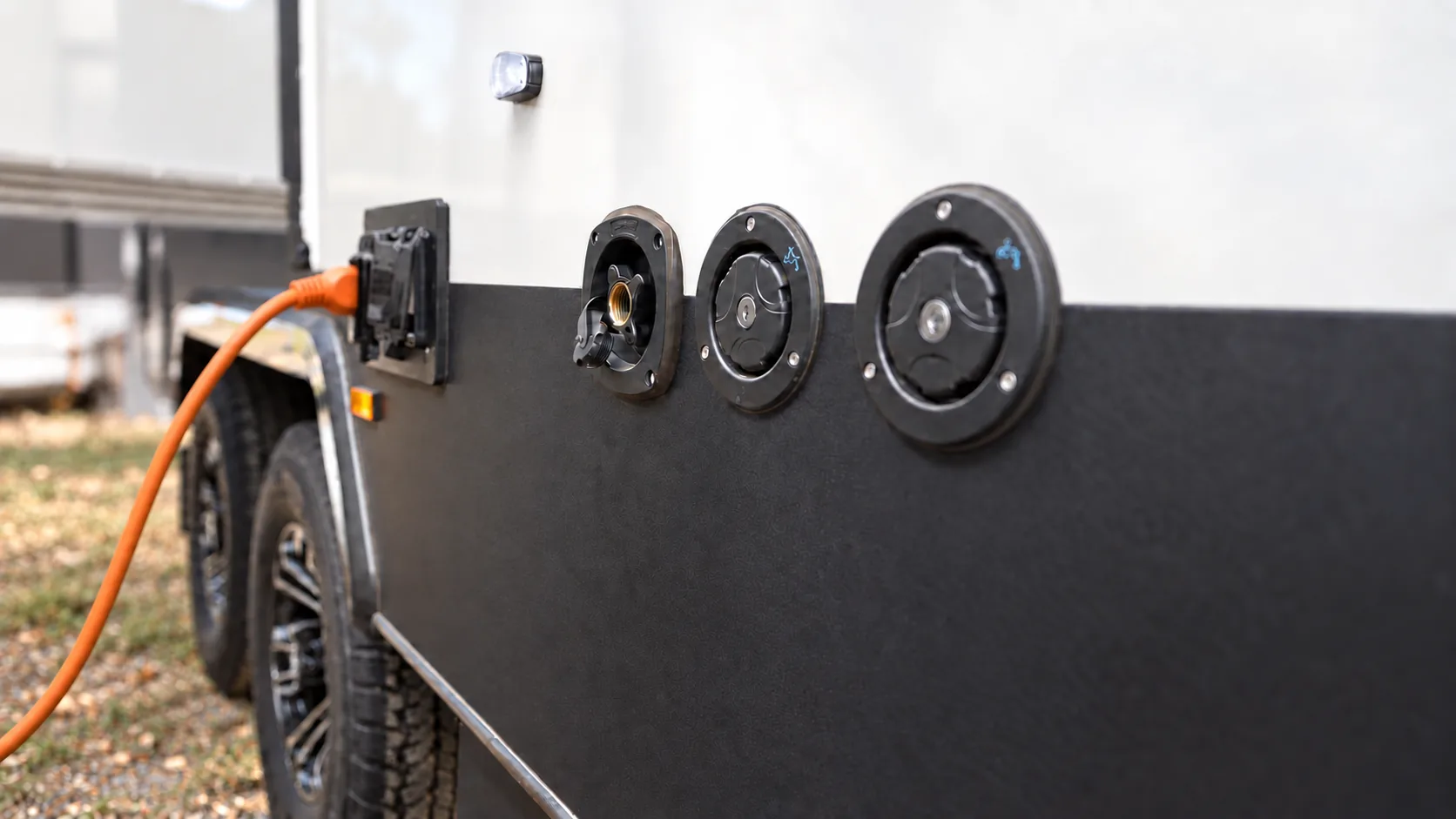
The 15A inlet with RCD, second bayonet gas point and front tap are grouped where setup actually happens – rather than scattered around the van.
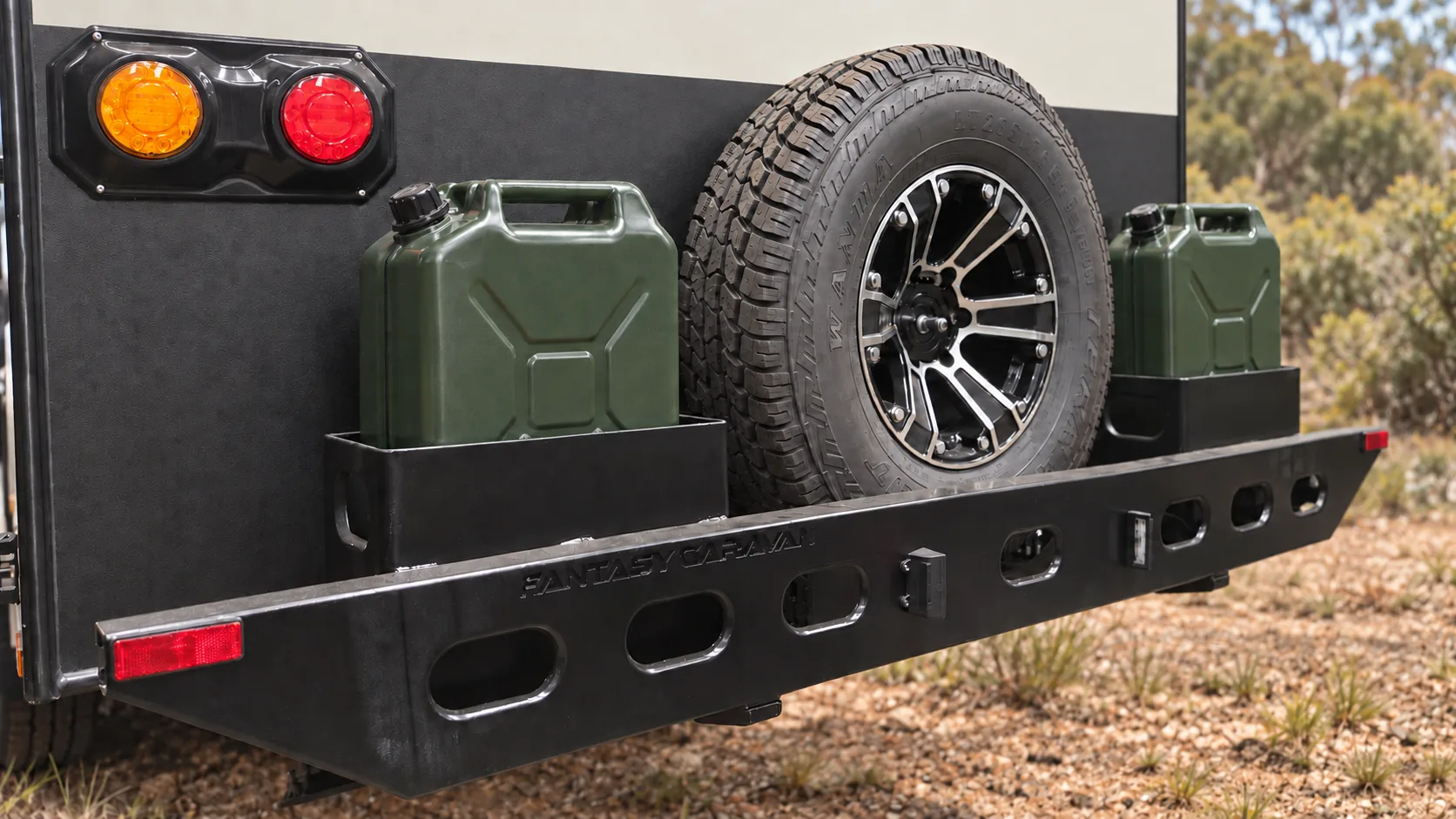
Two rear jerry-can positions on applicable models keep fuel or extra water outside the living space and ready between refills.
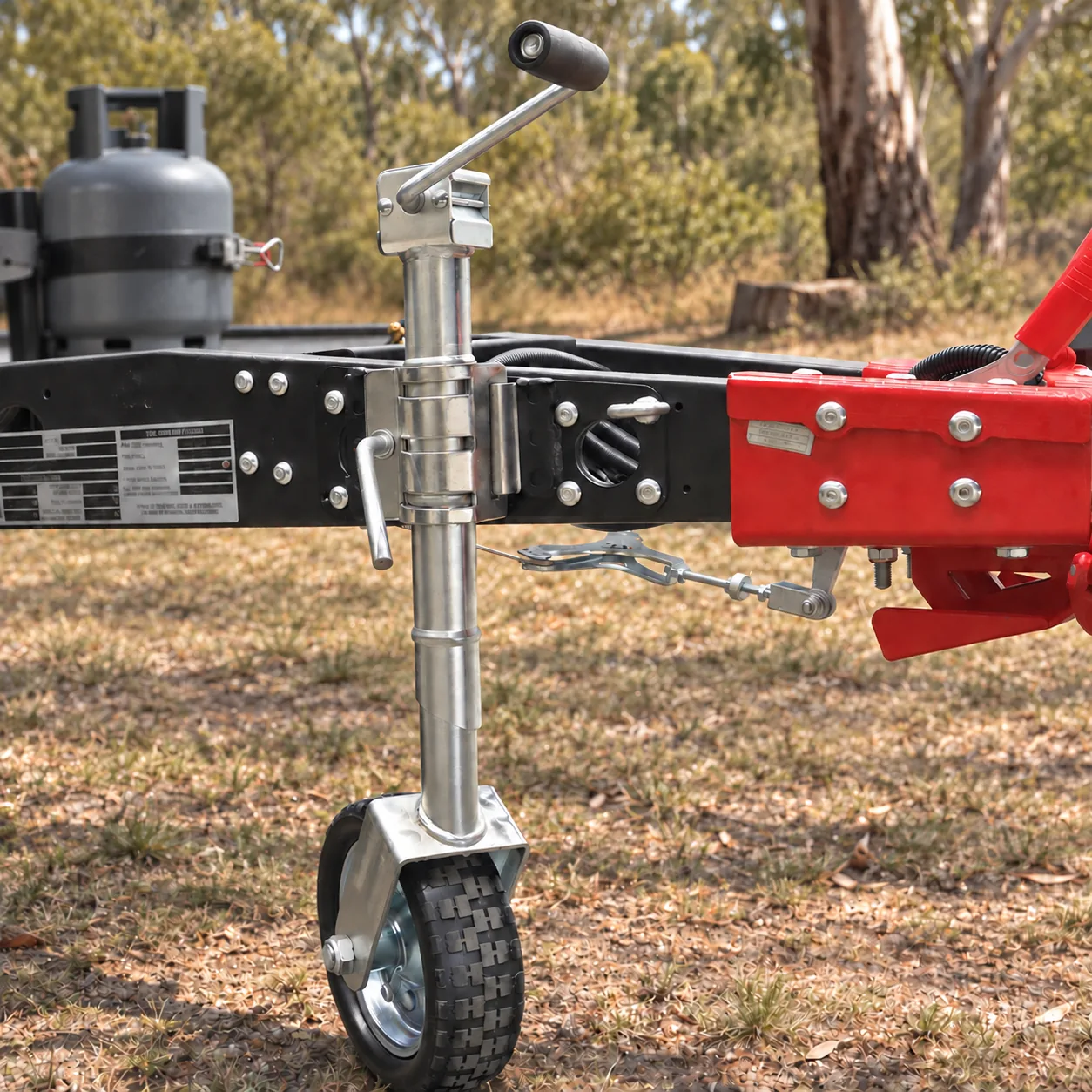
The 8-inch jockey wheel makes it easier to move, position and support the front on soft or uneven campsite ground.
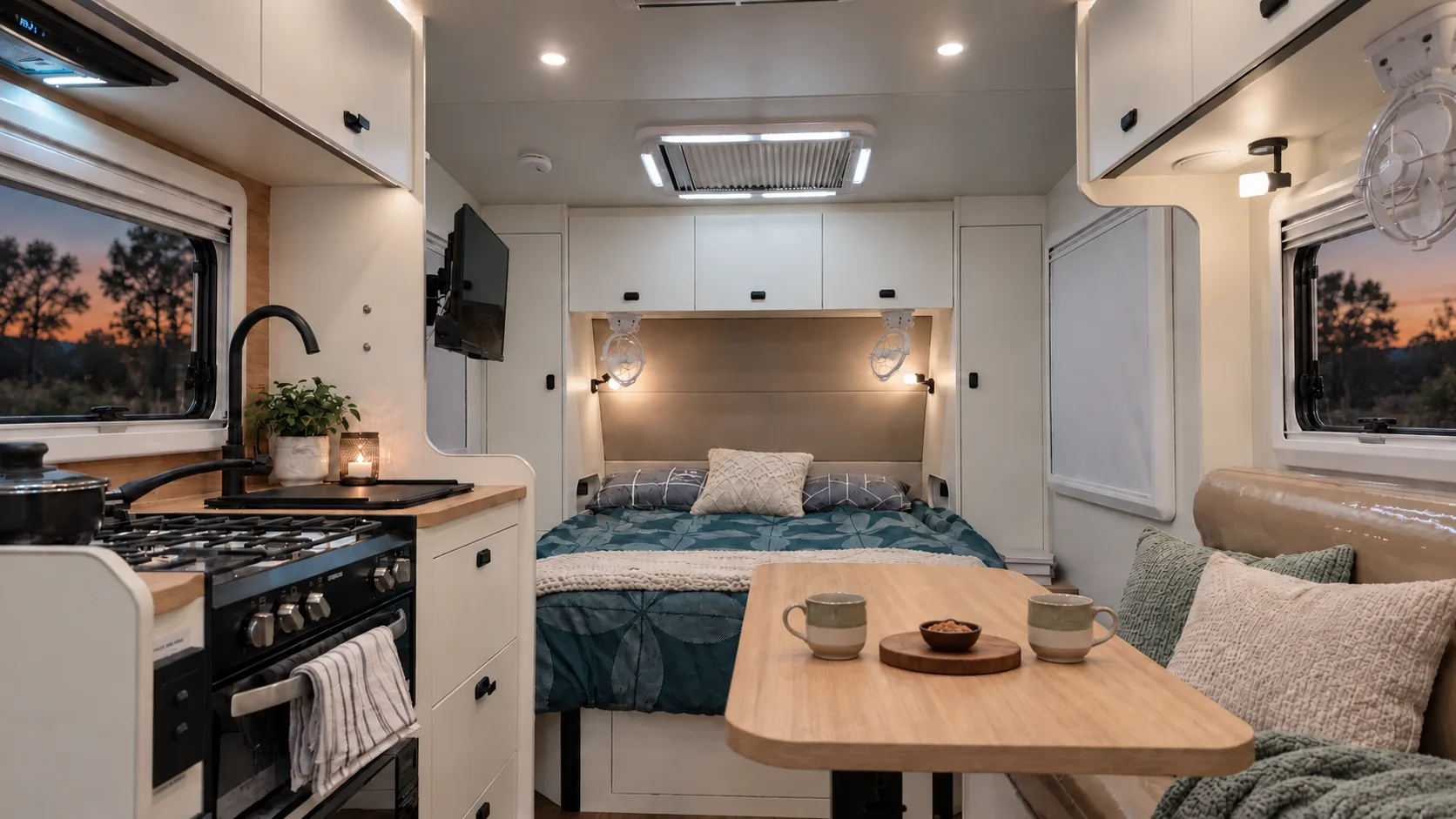
The everyday layout keeps the first jobs after arrival simple, so the living space starts working before the evening gets away from you.
Before you ask
The questions people actually put to us on the showroom floor.
Couples and families who want a caravan they can live in properly and still take down a gravel road — without buying an expedition rig for the two weekends a year it would matter. It suits first-time full-caravan buyers, people upgrading from an older van, and camper trailer owners who are done with setup.
Yes, in the honest sense of the word: sealed roads, maintained gravel access and short-to-medium off-grid stops — not hardcore off-road or expedition use. The difference from an on-road-only caravan shows up in the suspension and tyres, how the underbody copes with stones, and how well the body is sealed against dust and water; a full off-road build goes further again, at a real cost in weight and towing capacity. Skyline is built for the middle deliberately: torsion axle suspension and all-terrain tyres for the corrugations, a sealed composite body for the dust and stone chips. What any individual van handles still depends on the model, the load, the tow vehicle and the road on the day, and we would rather say that here than have you find out somewhere remote.
The shorter Skyline models sit on a 2,500 kg ATM, which keeps them inside the towing capacity of a wider range of vehicles than the 3,000 kg models. Towing capacity on its own does not settle it, though — your combination has to stay legal on three numbers at once: braked towing capacity compared against the van’s ATM (not its Tare, which is the van empty), towball download (the weight pressing down on the ball, which your vehicle and towbar each have their own limit for), and your vehicle’s own GVM and GCM, which is where otherwise legal-looking combinations come unstuck once the family, fuel and gear are loaded. Every model’s page has its exact ATM, Tare, payload and ball weight — bring your tow vehicle details to a viewing and we will check the match properly.
It is planned as one system: solar and driving charge the battery, one control screen shows what is happening, and the inverter supplies 240V away from a powered site. See Energy & Control for the full picture. Capacity and components vary by model and version.
Skyline uses a timberless composite wall system, a sealed exterior and an engineered chassis-and-drawbar structure. See What it is made of for the materials, construction logic and what to inspect at a viewing.
That has to be answered for a specific model and version — a washing machine is standard on most Skyline models — check the current spec for your selected model to confirm whether it’s included. Ask us to confirm the current configuration in writing before you order. It is the single most common source of confusion in this industry and we would rather remove it than inherit it.
Five answers usually get you to two models: who travels, how you want to sleep, whether the bathroom is a priority, what you tow with, and where you plan to go. Bring the tow vehicle details to a viewing and we will work through it properly.
No. The roof supports roof-mounted equipment and normal service access, but it is not designed or approved as a walkable surface. Anyone who tells you otherwise about any caravan is doing you no favours.